40 CFR Part 171 · Restricted Use Pesticides
Pesticide applicator certification:
the license behind the restricted label
To use or supervise restricted use pesticides you need applicator certification: private if you produce an agricultural commodity, commercial in one of 16 federal categories for everyone else. You must be 18, pass a written exam (or an approved training program for private applicators where your state allows it), and renew within five years by exam or continuing education. The framework is federal, your state lead agency runs it, and every fact on this site is verified against 40 CFR Part 171.
- Types
- 2
- Federal categories
- 16
- Minimum age
- 18
- Expires
- 5 yrs
- Renew by
- Exam or CE
Certification runs through state plans approved by EPA; your state lead agency operates the program, and land-grant extension services publish the study manuals in many states.
| Requirement | Under the federal standard (40 CFR Part 171) |
|---|---|
| Who needs it | Anyone who uses or supervises the use of a restricted use pesticide |
| Private applicator | Producing an agricultural commodity on land you or your employer own or rent |
| Commercial applicator | Everyone else, certified in one or more of the 16 federal categories |
| Minimum age | 18 |
| Exam | Written examination for commercial applicators; exam or approved training for private applicators, as the state plan provides |
| Expires | Five years after issuance at most; your authority may set a shorter period |
| Renewal | Re-examination or an approved continuing education program |
| Who runs it | Your state lead agency, under an EPA-approved plan; extension services publish the manuals |
Start here
How to get a pesticide applicator license
Find your state program, pick private or commercial, study the extension manuals, pass the exam.
Private vs commercial applicator
Which certification you need, decided by what you treat and for whom.
What a restricted use pesticide is
Why the label says restricted, who may buy it, and who may apply it.
The 16 commercial applicator categories
Every federal category in plain terms, and which ones pair up.
Pesticide applicator recertification
The five-year clock, and the exam-or-continuing-education renewal.
Structural pest control certification
The industrial, institutional and structural path, with fumigation as its own deep end.
Pest control salary
What applicator work pays, from the Bureau of Labor Statistics.
Right of way pest control
The certification category behind roadside, powerline and rail vegetation management.
Lawn care business certification
The ornamental and turf path, and when general use products keep you outside the requirement.
Everything on the site
The certification, verified
Types, categories, age, expiration and renewal from 40 CFR Part 171.
Your state lead agency
Who runs the program and publishes the manuals in all 50 states.
All guides
Careers, exams, categories and the path in.
Glossary
Recertification, pesticide label, certified applicator and the other terms the exam uses.
The career
What the work is, what it pays, and a working day on the route.
Free certification map
The printable one-page sheet of the verified requirements.
Two certifications, one system
Private applicator
Who: Producing agricultural commodities on land you or your employer own or rent, or on another producer's property when the application is unpaid apart from trading personal services between producers.
Requires: Competency shown by written exam or an approved training program, as the state plan provides; minimum age 18.
Commercial applicator
Who: Everyone else using or supervising restricted use pesticides, from lawn care firms to fumigators.
Requires: Passing score on a written examination (authorities may add performance testing); minimum age 18; certification in one or more categories.
The label is the law
Nothing on this site is use guidance. The label on each product is the controlling legal document, and your state lead agency is the authority on certification.
The working kit (the label decides what you actually need)
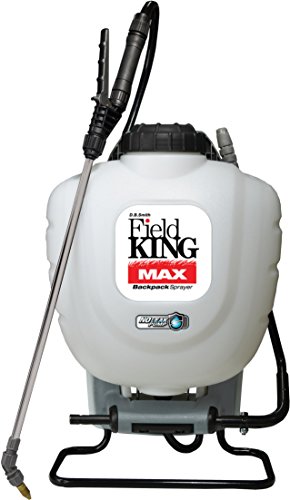 Field King Max backpack sprayerThe standard 4-gallon application tool
 3M 6300 half facepieceRespiratory protection, when the label calls for it
 Heavy-duty nitrile glovesChemical-resistant hand protection
PPE requirements come from each product label, which is the controlling legal document. These are common categories, not use guidance. The full kit page.
The companion book
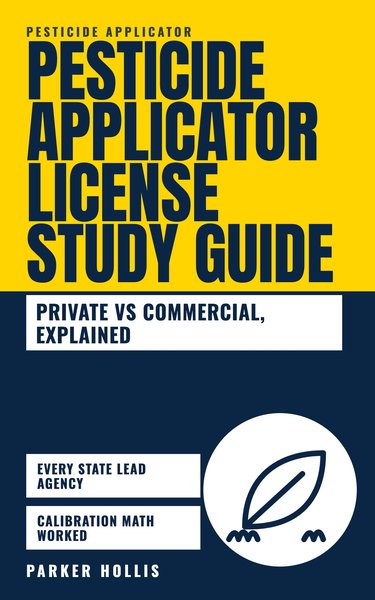
Private and commercial categories, restricted use rules, calibration math, recordkeeping, and every state lead agency.
The certification map, free
Private vs commercial, every federal category, and the five-year clock on one printable page. Enter your email and we will send you straight to it.
No spam. One useful sheet and occasional notes.