Guide
The commercial applicator categories, explained
A plain-language walkthrough of the federal commercial applicator categories, which ones commonly pair together, and how to choose categories when planning a pesticide application business.
When you decide to become a commercial pesticide applicator, the first surprise for most people is that there is no single, all-purpose commercial license. Commercial certification is organized into categories, and each category corresponds to a distinct kind of work. A technician who fumigates grain storage structures, a lawn care operator treating residential turf, and a pilot applying products to row crops from the air are all commercial applicators, but they hold different category certifications, studied from different manuals, and passed different exams. Understanding the category system before you start studying saves you time, money, and a fair amount of confusion.
The federal government, through the Environmental Protection Agency, defines a baseline set of commercial categories in its certification regulations. State lead agencies administer certification through EPA-approved plans, and they are free to add categories or subdivide the federal ones, but the federal list is the common skeleton you will find almost everywhere. This article walks through that federal list in plain terms: what work each category actually covers, which categories tend to travel together in real businesses, why the fumigation and aerial categories are considered the deep ends of the pool, and how to think about category selection if you are building a business plan rather than just chasing a single job requirement.
Why certification is split into categories
The logic behind categories is straightforward: competence is context-specific. Knowing how to safely treat the interior of a food processing plant tells an examiner very little about whether you can manage drift across an open field, calculate coverage for a pond, or handle the confined-space hazards of fumigation. Restricted use pesticides are restricted precisely because they demand additional competency, and that competency looks different in a forest than it does in a school cafeteria. Rather than requiring every applicator to master every setting, the system asks you to demonstrate competence in the specific settings where you will actually work.
For the applicator, this is mostly good news. You are not expected to learn aquatic weed biology if you will never treat water, and you are not tested on livestock parasites if your business is structural pest control. The category system narrows the field of study to what is relevant. The trade-off is administrative: you must hold a certification in each category that covers work you perform, and each category typically has its own exam and its own study manual. Commercial applicators demonstrate competency through written examination under the federal standard, and certifying authorities may add performance-based testing on top of that for certain categories.
The federal category list at a glance
Here is the full federal list. Names vary slightly from state to state, and states may add categories of their own, but these are the certifications defined at the federal level. Read the plain-terms column as a first orientation, then dig into the sections below for more detail on each.
| Federal category | What the work looks like in plain terms |
|---|---|
| Agricultural pest control: plant | Treating crops, grasslands, and noncrop agricultural land for weeds, insects, and disease |
| Agricultural pest control: animal | Treating livestock and animal premises for parasites and other animal pests |
| Forest pest control | Managing pests in forests, forest nurseries, and forest seed production |
| Ornamental and turf | Treating lawns, landscape plantings, trees, and shrubs around homes, businesses, and grounds |
| Seed treatment | Applying pesticides to seeds before planting |
| Aquatic pest control | Treating standing or running water for weeds, algae, and other aquatic pests |
| Right-of-way pest control | Vegetation management along roads, rail lines, utility corridors, and similar strips of land |
| Industrial, institutional, and structural | Pest control in and around buildings: homes, schools, warehouses, food plants, and stored products |
| Public health pest control | Government and public programs managing pests of medical importance, such as mosquitoes and rodents |
| Regulatory pest control | Government work controlling regulated or quarantine pests |
| Demonstration and research | Demonstrating application methods or conducting research that uses restricted use pesticides |
| Sodium cyanide predator control | A narrow specialization for a specific predator control device and use pattern |
| Sodium fluoroacetate predator control | A narrow specialization for a specific livestock protection use pattern |
| Soil fumigation | Applying fumigants to soil, typically before planting |
| Non-soil fumigation | Fumigating structures, commodities, and other non-soil sites |
| Aerial application | Applying pesticides from aircraft, fixed wing or rotary |
States build on this list
State lead agencies may add categories beyond the federal list or split federal categories into narrower ones. Always check your state's category list before deciding what to study, because the state list is the one your exams will actually follow.
Agricultural pest control: plant and animal
The agricultural category is really two related certifications. The plant side covers pest control on crops: row crops, vegetables, fruit, forage, grain, and the noncrop agricultural land that surrounds production, such as fence lines and fallow ground. If you are a custom applicator treating other people's fields for hire, this is your home category. The subject matter leans heavily on weed, insect, and plant disease identification, application timing relative to crop growth stages, and the practical realities of covering large acreages without moving product where it does not belong.
The animal side covers pesticides applied to livestock and to the places livestock live. Think external parasite control on cattle, treatments in and around barns and confinement facilities, and premise treatments for flies and other pests of animal agriculture. The competency emphasis shifts toward animal safety, the connection between treatments and food production, and reading labels for uses on or around animals. Some businesses need both halves of the agricultural category, and many states let you test for them separately so you only carry what you use.
Forest pest control
Forest pest control covers pesticide work in forests, forest nurseries, and seed production for forest species. In practice this means herbicide work for site preparation and competing vegetation control, insect management during outbreaks, and nursery work where young trees are grown at high density. The setting drives the competency: applications often happen on rough terrain, near water, and across mixed ownership boundaries, so the category emphasizes drift management, water protection, and planning applications across large and irregular blocks of land. Foresters, silviculture contractors, and nursery managers are the typical holders.
Ornamental and turf
This is one of the most commonly held commercial categories because it maps onto the lawn and landscape industry. It covers pest control in ornamental plantings, on turfgrass, and on trees and shrubs around homes, commercial properties, parks, and institutional grounds. The daily work is weed control in lawns, insect and disease management on landscape plants, and tree care. The competency emphasis includes plant identification, working safely in populated areas where people and pets use treated spaces, and communicating with customers who live on the sites you treat. If your business card says lawn care, grounds maintenance, or landscaping, this category is almost certainly on your list.
Seed treatment
Seed treatment is a narrow, industrial category covering the application of pesticides to seed before planting. The work usually happens in dedicated treatment facilities or at seed dealers rather than in open fields. Competency centers on the treatment equipment itself, on ensuring treated seed is handled and labeled so it never enters food or feed channels, and on worker protection inside the facility. It is a good example of how specific the category system can get: the entire certification exists because treating seed presents a distinct set of hazards and label requirements that field application knowledge does not cover.
Aquatic pest control
Aquatic pest control covers applications made to standing or running water: ponds, lakes, irrigation canals, drainage ditches, and similar sites, typically to manage aquatic weeds and algae. Water is unforgiving as an application site. Product moves with it, non-target organisms live in it, and downstream users depend on it, so the category emphasizes understanding water use restrictions, protecting fish and other aquatic life, and calculating treatments for volumes of water rather than areas of land. Applicators who manage golf course ponds, irrigation systems, or community lakes hold this category, and it pairs naturally with several others discussed below.
Right-of-way pest control
Right-of-way work is vegetation management along the linear corridors that keep infrastructure functioning: highways and roadsides, railroad beds, electric and pipeline corridors, and similar strips of land. The work is mostly herbicide application to control brush and weeds that would otherwise interfere with visibility, access, or equipment. The distinctive competencies are managing applications across long, narrow sites that pass through many different environments in a single day, handling drift near sensitive neighbors, and working around traffic and utilities. Contractors serving highway departments, railroads, and utilities are the core audience for this category.
Industrial, institutional, and structural
This category is the home of what most people picture when they hear the words pest control: work in and around buildings. It covers homes, apartment buildings, offices, schools, hospitals, food processing plants, warehouses, and the protection of stored products. The pests are the familiar structural cast, from cockroaches and ants to rodents and wood-destroying organisms, and the settings raise their own stakes, because applications happen where people live, eat, sleep, and work.
The competency emphasis is correspondingly indoor-focused: understanding how buildings are constructed and where pests harbor, choosing methods appropriate for sensitive sites such as kitchens and patient care areas, and integrating non-chemical tools like exclusion and sanitation into the job. Structural work tends to stand on its own as a business. The customer base, the equipment, the vehicles, and the training all differ enough from outdoor plant-focused work that many structural firms hold only this category, and many outdoor businesses never add it.
Public health pest control
Public health pest control covers state, tribal, federal, and other governmental programs managing pests that carry disease or otherwise threaten human health, with mosquito control districts as the classic example. Employees and contractors of these programs manage vectors such as mosquitoes, ticks, and rodents across whole communities. The category emphasizes vector biology, surveillance that tells a program when and where to treat, and the particular responsibility that comes with applying pesticides across areas where the public lives. If you work for a mosquito abatement district or a health department vector program, this is your category.
Regulatory pest control
Regulatory pest control is another government-flavored category, covering the control of regulated pests: organisms subject to quarantine or official control programs. The work involves government employees or their agents suppressing or eradicating pests that trigger regulatory action, often at borders, ports, nurseries, or within declared quarantine zones. The competency emphasis includes recognizing regulated pests, understanding the programs that target them, and executing treatments that must meet an official standard rather than a customer preference. Most private businesses never need this category; it exists for the people doing official pest exclusion and eradication work.
Demonstration and research
The demonstration and research category covers two related groups: people who demonstrate application techniques and equipment to others, such as extension personnel conducting field demonstrations, and researchers who use restricted use pesticides in experimental work. Both groups routinely handle products in unusual ways: at experimental rates, on experimental sites, or in front of audiences learning from what they see. The category exists so that this work is done by people who can model correct practice and understand the added responsibility of using products outside routine commercial patterns. University research staff, extension educators, and industry researchers are the typical holders.
The predator control categories
Two categories on the federal list are far narrower than the rest: sodium cyanide predator control and sodium fluoroacetate predator control. Each exists to govern a single, tightly controlled predator management use pattern used in livestock protection work. The tools involved are among the most strictly limited in the entire pesticide system, with detailed use restrictions and, in the sodium fluoroacetate case, a specific delivery device for protecting livestock. Unless you work in professional predator damage management, usually alongside government wildlife services programs, you will never touch these categories. They are worth knowing about mainly as proof of how precisely the category system can target a specific competency.
The deep ends: fumigation and aerial application
Three categories sit apart from the rest in the demands they place on the applicator: soil fumigation, non-soil fumigation, and aerial application. It is no accident that these are defined as their own categories rather than folded into agricultural or structural work. Fumigants and aircraft each introduce hazards that ordinary application experience does not prepare you for, and the certification system responds by requiring dedicated competency.
Fumigation, in both its soil and non-soil forms, involves pesticides that act as gases. A gas does not stay where you put it the way a spray deposit does. It moves through soil profiles, through commodities, and through the air people breathe, which is why fumigation work revolves around containment, monitoring, aeration, and site security in a way surface applications never do. Soil fumigation covers field work, typically treating ground before planting. Non-soil fumigation covers structures, stored commodities, shipping containers, and similar enclosed sites. The competency emphasis in both is planning: fumigation management plans, respiratory protection, entry restrictions, and knowing exactly when a treated site is safe to reoccupy. Applicators usually add a fumigation category on top of a base category after gaining experience, and employers treat it as a senior qualification.
Aerial application is the other deep end. Everything about applying pesticides from an aircraft raises the difficulty: the speeds involved, the altitudes, the interaction of the aircraft's own airflow with the spray pattern, and the size of the area affected if something goes wrong. The category layers pesticide competency on top of aviation competency, covering application equipment on aircraft, drift management at aerial scales, and coordination with ground crews. Aerial applicators typically hold this category alongside the agricultural plant category, since crop work is the bulk of the flying, and the combination represents one of the longest training paths in the profession.
Categories that commonly pair
Real businesses rarely map onto a single category, and some pairings show up again and again because the underlying work overlaps. When you look at job postings or talk to established operators, expect to see combinations like these:
- Ornamental and turf with right-of-way: both are outdoor vegetation management, and a crew that treats commercial grounds can often serve utility or roadside contracts with the same equipment and much of the same plant knowledge.
- Agricultural plant with aerial application: aerial operators exist mostly to serve crop production, so the flying category almost always sits on top of the agricultural one.
- Agricultural plant with soil fumigation: pre-plant soil work is an extension of crop services, and custom applicators add the fumigation category to offer it.
- Ornamental and turf with aquatic: grounds businesses that maintain properties with ponds and water features add aquatic certification so a single visit can cover the whole site.
- Right-of-way with aquatic: corridor work constantly crosses ditches, canals, and drainages, and the aquatic category keeps that work legal and competent.
- Industrial, institutional, and structural with non-soil fumigation: structural firms doing commodity or whole-structure fumigation add the fumigation category as a specialized service line.
- Structural largely on its own: general structural pest control is a complete business by itself, and many firms in this space hold only this category.
Choosing categories for a business plan
If you are planning a business rather than filling a single job requirement, category selection is a strategy question, and it deserves the same thought as your equipment list or your service area. Start from the services you intend to sell in your first year, not the services you might someday offer. Every category you hold must be earned by exam and then maintained through your state's recertification system, so each one carries a permanent cost in study time and continuing education. A short list of categories you actively use beats a long list you maintain out of vague optimism.
Second, think about adjacency. The pairings above exist because adjacent categories let one crew, one truck, and one customer relationship generate more revenue. If your core is grounds maintenance, the aquatic category may unlock every property with a retention pond in your service area. If your core is crop services, fumigation may be the specialization that separates you from other custom applicators. Choose a base category that matches your anchor service, then add the one or two adjacent categories that expand what you can sell to the customers you already have.
Third, respect the deep ends. Fumigation and aerial work command a premium precisely because the barriers to entry are high, but they are poor first categories. The sensible sequence is to build competence and a customer base in a mainstream category, then add the specialized certification when the business case is concrete: a signed customer, a contract opportunity, or a clear local gap. Finally, check the supervision rules in your state. Noncertified applicators may work under the direct supervision of certified applicators, which means one properly certified person can anchor a crew, but the certified applicator carries responsibility for that supervised work, so plan your certifications around how your crews will actually be staffed.
Confirm the list where you live
Everything above describes the federal skeleton. Your state lead agency publishes the authoritative category list for your location, along with the exams required for each and the study manuals that support them, which are usually produced by the land-grant university extension service. Before you commit to a study plan, get the state list, match your intended services to its categories, and order the corresponding manuals. The federal framework tells you how the system thinks; the state list tells you exactly what to do next.
See how our practice exams cover the core and category material
The certification map
One printable page: private vs commercial, every federal category, and the five-year clock with the exam-or-CE choice. Free.
No spam. One useful sheet and occasional notes.
The working kit (the label decides what you actually need)
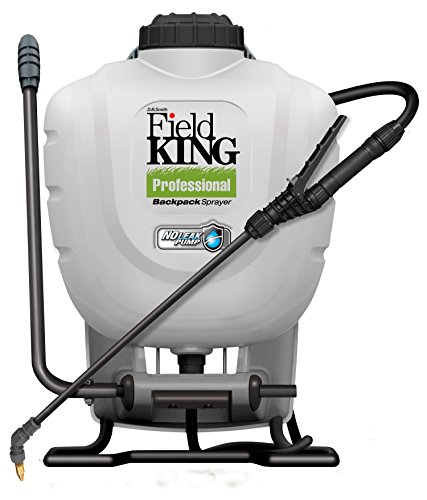 Field King backpack sprayerThe standard 4-gallon application tool
 3M 6300 half facepieceRespiratory protection, when the label calls for it
 Heavy-duty nitrile glovesChemical-resistant hand protection
PPE requirements come from each product label, which is the controlling legal document. These are common categories, not use guidance. The full kit page.