Guide
A working day as a certified applicator
A composite, honest walkthrough of a certified applicator's day: the route board, truck and tank checks, label review, residential and commercial stops, protective gear in summer heat, the records at every stop, and how an agricultural day differs.
What follows is a composite day, assembled from the routines this work actually shares across companies and regions rather than from any one technician's diary. No single applicator's day looks exactly like this, and an honest description should say so up front. But the shape of the day, the route board, the truck, the labels, the stops, the paperwork, the gear, is remarkably consistent across the structural side of the industry, and seeing that shape clearly is the best way to judge whether the work fits you before you commit to studying for a license.
The description runs on structural time: a route technician's day serving homes and businesses. The final section turns to how an agricultural application day differs, because the two sides of the certified world share a license family and a legal spine but not a rhythm, and conflating them misleads people in both directions.
The route board
The day starts at the shop, or on a tablet in the driveway for companies that dispatch remotely, with the route board: the day's stops in order, with service types, time windows, gate codes, pet warnings, and account notes attached. Reading it well is a skill in itself. The board tells you which stops are routine recurring services, which are callbacks where a previous treatment did not hold, which are new customers who need a full inspection and a longer conversation, and which are commercial accounts with scheduled windows that cannot slip. A callback changes how you prepare, because you will need to work out why the first attempt failed. A new account changes what you load, because you do not yet know what you will find. The technicians who seem effortlessly ahead of their day are usually just the ones who read the board hard in the first quiet minutes of the morning.
The route is also a geography problem. Stops get sequenced to respect time windows while minimizing backtracking, and drive time between them is real work time: it is when the confirmation calls happen, when the schedule gets renegotiated after a stop runs long, and when the day's slack gets spent or saved. Much of this job is performed alone in a truck between houses, and people considering the career should weigh that honestly. For some it is the best feature of the work, a day managed by no one but themselves. For others the solitude wears, and no amount of pay fixes a rhythm you dislike.
Truck and tank
Before the first mile, the vehicle check. The truck is a rolling chemical storage facility and it gets treated like one: products secured and separated correctly, labels and safety data sheets on board for everything carried, spill kit stocked, protective equipment present and serviceable, application equipment intact. Then the tank and rig: agitation working, hoses and fittings sound, sprayer pressure right, and the mix planned against what the day's route actually needs rather than by habit. Mixing and loading are the highest-exposure moments in this occupation, so this part is done deliberately, with the gear on, not with a coffee in one hand and a phone in the other.
- Products secured, labeled, and separated according to their storage requirements
- Labels and safety data sheets on board for every product carried
- Spill kit complete, protective equipment present, clean, and serviceable
- Application equipment inspected: hoses, fittings, nozzles, pressure, agitation
- The day's mix planned against the route board, not poured from routine
The label, again
Before the first job, the label review, and this is the part outsiders reliably underestimate. The phrase every applicator learns, that the label is the law, is not a slogan. The label is a legally binding document dictating where a product may be used, on which pests, at what rates, with what protective equipment, and under what re-entry restrictions, and the certified applicator is the person legally answerable for all of it. Experienced technicians re-read labels for products they have used a hundred times, because products get reformulated, because sites differ, and because the day you stop reading is the day the shortcut culture starts. A few quiet minutes with the label before the first stop is the cheapest insurance in the entire trade.
The residential stop
The first stop is a recurring residential service, and the routine is inspection before treatment, always. Walk the exterior, check the known problem areas from the account notes, look for new evidence, and note what has changed since the last visit. Treatment follows what the inspection found rather than a fixed script, because applying product where there is no pest activity is both bad practice and wasted chemical. At a routine stop, the actual application is often the shortest part of the visit, and that surprises people who imagine the job as spraying from arrival to departure.
Then the conversation, which is a bigger part of this job than anyone tells you before you take it. The customer wants to know whether it is safe for the kids and the dog, when they can use the yard again, why they are still seeing ants in the kitchen, and whether they really need the service this time around. The honest applicator answers from the label and the inspection, not from a sales script: what was found, what was applied and why, what the re-entry guidance is, and what the customer can fix themselves, the loose trash can lid, the firewood stacked against the siding, the branch bridging from the fence to the roofline. That candor is also, not coincidentally, what keeps an account for a decade. Route technicians live and die on trust, and trust is built in these short doorway conversations far more than in the treatment itself.
The callback
Somewhere in the morning sits a callback, and callbacks are where technicians actually get good. A treatment did not hold, and the job now is diagnosis rather than repetition: was the pest misidentified in the first place, was the source never found, did conditions defeat the product, or did the customer's expectations outrun what the service honestly promised. The technician re-inspects from zero, and more often than not finds a cause rather than a mystery, a moisture problem feeding the infestation, an entry point nobody sealed, a neighboring source reseeding the property. The fix stays inside the label, the explanation goes to the customer straight, and the notes record what changed so the next visit starts smarter. Companies that treat callbacks as information instead of embarrassment build better technicians, and technicians who treat them as puzzles instead of insults build better routes.
The commercial account
Midday brings a commercial stop, a restaurant or a warehouse, and the register of the work changes completely. Commercial service is documentation-forward: sign in with the manager, review the logbook kept on site, walk the facility along its mapped route, inspect and service the monitoring devices, and record everything in a service report that the customer's own inspectors and auditors may read. Food-handling facilities live under health codes and third-party audit schemes, and the pest control paperwork is part of what they are audited on, which means the technician's records belong to the customer's compliance story, not just the company's files. Sloppy notes that would slide at a house can cost a commercial account real audit points. This is why commercial routes go to the meticulous, and why they tend to pay accordingly.
Commercial work also bends the clock. Restaurants want service before the doors open, food plants may want it overnight during sanitation windows, and offices want the truck gone before the parking lot fills. A route with commercial anchors often means an earlier start than a purely residential one, and a technician who can be trusted alone in a closed facility at odd hours, badge in, do the work, document it, and leave everything exactly right, has a kind of reliability that shows up in how they are scheduled, trusted, and eventually paid.
Gear in the heat
By afternoon in summer the honest part of the job shows up. Protective equipment exists because the exposure is real, and it does not become optional when the heat index climbs. Long sleeves, gloves, and for some products and tasks a respirator, worn correctly in exactly the hours when the body wants none of it, at the mixing and loading moments when exposure risk peaks. This is the discipline the whole career balances on. The gear comes off for the drive and goes back on at the tank, every time, and the applicators who last are the ones who never negotiate with the label about it, on the ninetieth stop of a hot week exactly as on the first.
Heat itself gets managed like a job task, because it is one. Water in the truck, the hardest physical work scheduled early when the route allows it, and genuine attention to what heat illness looks like in yourself, because a solo technician in an attic or a crawlspace has no one watching them but themselves. None of this is dramatic on any given day. All of it is cumulative, and the difference between a long career and a short one is mostly the sum of these undramatic afternoon decisions.
The honest part
Chemical exposure in this occupation is managed, not imaginary. Used exactly as labeled with the required protective equipment, modern products are designed to be handled safely, and the certification system exists to keep it that way. But the margin lives in daily behavior: gear worn correctly in heat, care at mixing and loading, and refusal to shortcut. Anyone considering this career should decide up front whether that is a discipline they will genuinely keep when nobody is watching.
The record at every stop
Every stop ends the same way: the record, entered before the truck moves. What was found, what was applied, where, in what amount and concentration, under what conditions, at what time, against which target pest. Regulations require application records for restricted use products, employers require them for everything, and states and commercial customers layer their own requirements on top. The records are not busywork. They are the evidence that protects the applicator when a neighbor alleges drift, a customer claims harm, or an inspector audits the operation, and they only protect if they are contemporaneous, complete, and true. A record reconstructed at the end of the day from memory is worth a fraction of one written at the tailgate, and technicians who defer their paperwork learn that the hard way, sooner or later, in front of exactly the wrong audience.
| Stretch of the day | What it looks like | What it tests |
|---|---|---|
| Early morning | Route board, truck and tank checks, label review | Preparation and honest self-inspection |
| Morning stops | Residential inspections, treatments, doorway conversations | Pest knowledge and plain-language candor |
| Midday | Commercial account with logbook and service report | Audit-grade documentation discipline |
| Afternoon | More stops in full gear through the heat | Protocol discipline when comfort argues against it |
| Each stop's close | Records entered before the wheels move | Consistency that stands up as evidence |
How an agricultural day differs
An agricultural application day shares the legal spine, certification, the label, the records, and almost nothing else about its rhythm. There is no board of many small stops; there are a few large jobs, or one, gated entirely by weather. Wind speed and direction, temperature, and the chance of rain decide whether the day happens at all, because drift onto a neighboring field, a garden, or a sensitive site is the agricultural applicator's version of a career-ending mistake. That is why agricultural days start before dawn, when the air is calm, and why the work compresses into whatever window the weather grants and stops when it closes, regardless of what the calendar wanted.
The equipment scale changes everything else. Ground rigs with long booms replace backpack sprayers and truck-mounted tanks, and calibration becomes a discipline in itself: nozzle checks, output verification, and the math that turns a labeled rate into a correct pass across a field measured in acres rather than square feet. Mixing and loading happen at far larger volumes, which raises the stakes of the same exposure moments the structural technician manages at smaller scale. And where the structural technician's audience is a homeowner at the door, the agricultural applicator's is the treated field itself: the re-entry interval and its posting requirements, the workers who must stay out until it lapses, and the neighbors whose crops and beehives sit downwind. The recordkeeping is just as mandatory and, for restricted products, just as legally loaded.
The people differ too. Much agricultural application is done by private applicators, farmers certified to treat their own operation's land, for whom application is one duty inside a farming life rather than a standalone job, and the rest by commercial operators for whom the season is a sprint of long days followed by a quieter stretch of maintenance and other work. A structural route is a steady weekly shape repeated year-round; an agricultural season is a compressed intensity followed by recovery. The certification framework distinguishes exactly this, private from commercial, and choosing between these working rhythms is really what choosing a certification path is about.
What the day adds up to
Strip the composite to its skeleton and the day is this: prepare deliberately, read the law before you act, inspect before you treat, tell customers the truth, document everything, and keep the gear on when it is miserable. None of it is glamorous and all of it compounds. The technicians who thrive describe the same satisfactions: a route that runs smoothly because they built it that way, customers who trust them by name, deepening pattern knowledge of how pests move through buildings and seasons, and the independence of a day managed almost entirely by themselves. The ones who wash out name the same culprits: the heat, the crawlspaces, the paperwork, and the discipline that never gets a day off. Both groups are describing the same job. Which group you would join is knowable in advance, and it is exactly the temperament the certification process starts to test.
If this shape of day reads as workable, or better, as genuinely appealing, the path in is short and concrete: certification, categories matched to the work you actually want, and a license that makes you the legally accountable professional this entire day is built around.
See how certification works and what the exams cover
The certification map
One printable page: private vs commercial, every federal category, and the five-year clock with the exam-or-CE choice. Free.
No spam. One useful sheet and occasional notes.
The working kit (the label decides what you actually need)
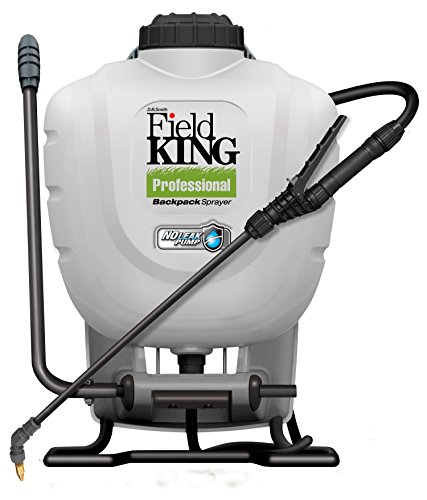 Field King backpack sprayerThe standard 4-gallon application tool
 3M 6300 half facepieceRespiratory protection, when the label calls for it
 Heavy-duty nitrile glovesChemical-resistant hand protection
PPE requirements come from each product label, which is the controlling legal document. These are common categories, not use guidance. The full kit page.