Guide
The farm's certification: private applicator, in practice
Private applicator certification as it actually lives on a working farm: who on the operation needs it, family labor and employees under the supervision rules, the five-year clock on a farm calendar, and keeping the credential matched to the work.
On paper, private applicator certification is a definition in the federal standards. On a working farm, it is something more concrete: it is the answer to who can pick up restricted use product from the dealer, who can run the sprayer when a field needs treating in a narrow window, who can legally direct the crew helping that day, and what happens to all of the above when the one person holding the certificate is unavailable in the busiest week of the season. This guide is about the private certification as it actually lives on an operation, which people need it, how family labor and employees fit, how the renewal clock interacts with a farm calendar, and how to keep the credential matched to what the farm actually applies.
The foundation first. The federal certification standards at 40 CFR Part 171 recognize two types of certified applicator. A private applicator is certified to use or supervise the use of restricted use pesticides for the purpose of producing an agricultural commodity on land owned or rented by the applicator or the applicator's employer. A commercial applicator is everyone else who uses or supervises restricted use products. The private definition is the farm's definition: it has a purpose test, producing an agricultural commodity, and a land test, ground that you or your employer own or rent. A working farm treating its own fields, orchards, pastures, and livestock passes both tests all day long, which is exactly what the category was built for.
The trigger for needing any certification at all is the restricted use classification. Products that are not restricted use do not fire the federal requirement, and an operation that genuinely uses nothing but general use products can run without a certified applicator on the payroll. In practice, most commodity operations of any scale want restricted use tools available in at least some seasons, and the operations that keep a current certification on hand are the ones that never have to turn down the right tool because nobody can lawfully buy or apply it. It is worth saying plainly: the certification is not a license to farm. It is the key to one specific toolbox, and the farm decides whether that toolbox is worth keeping unlocked. Most decide it is.
Who on the operation actually needs it
The requirement attaches to two verbs: use and supervise. Anyone who uses a restricted use pesticide, and anyone who supervises its use, must either be a certified applicator or be working as a noncertified applicator under the direct supervision of one. So the honest way to answer the who question is to walk the operation and list the people who actually touch restricted use applications in a season. Who buys the product? Who mixes and loads? Who runs the applicator, the sprayer, the spreader? Who tells the part-time help what to do when a treatment is running? Every name on that list needs to be covered by a certification, their own or a supervisor's.
On many farms the honest list is longer than the certificate count. A typical pattern: the operator is certified, and everyone else, a spouse who runs loads during planting, an adult child who covers fields while the operator is at the other place, a hired hand who does whatever the day needs, works under the operator's supervision without anyone having thought hard about what supervision requires. That pattern is workable when it is deliberate and the supervision is real. It is fragile when it is an accident, because the entire restricted-use capacity of the operation is riding on one credential and one person's availability, and the season does not schedule itself around either.
There is one bright-line eligibility rule to plan around: certified applicators must be at least 18 years old, private and commercial alike. Farm kids grow up around the work, and it is common for a sixteen-year-old on a family operation to be a genuinely skilled equipment operator. The federal standards do not bend for that. Until 18, a young person cannot hold the certification, and the operation's use of restricted use products around them has to be structured accordingly. The productive move for a younger family member headed for the operation is to put the extension core manual in their hands early. Someone who has read the material twice before their eighteenth birthday will treat the exam as a formality and the label as a habit.
Family labor, employees, and the private definition
The private definition covers more people than the owner. Read it again: producing an agricultural commodity on land owned or rented by the applicator or the applicator's employer. That employer clause means a farm employee can hold a private certification in their own name for work on the farm's ground. The hired hand who does the operation's spraying can be a certified private applicator, fully and independently, because the land belongs to their employer and the purpose is the employer's production. Family members who work in the operation fit the same way, whether the family arrangement looks like employment on paper or not; a family member producing the operation's commodities on the operation's ground is inside the private world. When the structure is unusual, separate entities, land in one name and the operating business in another, describe the actual arrangement to your state lead agency and let them confirm the fit rather than guessing.
So for each person on the list you made above, the operation has two lawful options. Option one: that person earns their own private certification, demonstrating competency through the state's EPA-approved plan, which in most states means a written exam built on the extension core manual. Option two: that person works as a noncertified applicator under the direct supervision of a certified applicator, subject to the supervision requirements. Both options are legitimate. The difference is where responsibility and capacity sit. A person with their own certification can buy, use, and supervise independently. A supervised person borrows all of that from their supervisor, and the supervisor answers for the work.
Supervision deserves respect as a working arrangement, because it is easy to imagine it more loosely than the rules do. Direct supervision is not the certificate holder being somewhere on the same farm, or reachable by phone in another county, unless the actual requirements for the application at hand are met. The certified applicator is responsible for the application performed by the noncertified worker, and the requirements attached to supervision exist so that no unqualified person is left making a decision they are not equipped to make. Some product labels also set their own conditions on who may be present or performing tasks, and the label's word is final. Before the season starts, the certified applicator on a family operation should be able to say exactly which people work under their supervision, on which tasks, and how that supervision actually operates during a treatment. If that sentence is hard to complete, the structure needs work before the sprayer moves.
- The operator, certified, using restricted use products on the operation's own and rented ground: the core case the private category was built for
- A spouse or adult child in the operation, either certified in their own right or working under the operator's direct supervision
- A hired hand applying on the employer's ground: eligible for their own private certification, or supervised in the meantime
- A younger family member under 18: not eligible to certify yet, and not a substitute for certified or supervised labor on restricted use work
- A neighbor or landlord asking you to treat ground you neither own nor rent nor farm for your employer: outside the private definition entirely, and a commercial question
The one-certificate farm, and why it is a risk
The most common certification structure on family operations is also the most fragile: exactly one certified applicator, usually the principal operator, covering everything. It works until it does not. The operator is the one person who cannot be spared in the peak weeks, and also the only person who can lawfully use or supervise restricted use applications. If they are down with an injury, stuck at a breakdown, called away, or simply needed in two places at once, the operation's restricted-use work either stops or drifts into territory nobody would defend on inspection. And if the certification itself lapses quietly, the whole operation's access to restricted use tools lapses with it, at whatever moment the renewal was missed.
The fix is the same as it is in any business that depends on a credential: redundancy. A second certified applicator on the operation, a spouse, an adult child, a foreman, converts a single point of failure into a resilient structure. The cost is a manual, some study, and an exam through the state program. The return is an operation where treatments happen on the crop's schedule rather than the credential holder's, where supervision duties can be shared rather than concentrated, and where one missed renewal or one bad week does not idle the sprayer. Operations that think in terms of succession have an extra reason: the day the next generation takes over the applications, it should be a handoff between two certified applicators, not a scramble to certify under deadline.
The five-year clock on a farm calendar
Certification carries its own calendar, and it is worth laying that calendar directly over the farm's. Under the federal standard, a certification expires five years after it is issued, and your certifying authority may set a shorter period than that. The date on your own credential is the one that governs. Renewal runs one of two ways: pass the written examination again, or complete an approved continuing education program, whichever your authority's EPA-approved plan provides. Five years sounds long, and that is precisely the problem. It is long enough for a date to fall out of memory entirely, long enough for an address change to eat a reminder notice, and long enough that the renewal arrives in whatever season it happens to arrive in, sympathetic to the farm's workload or not.
So put the clock on the operation's calendar, not just the operator's memory. The day a certification is issued or renewed, its expiration goes wherever the farm keeps its other unmissable dates, alongside insurance renewals and loan schedules, with a reminder set at least a full season ahead of expiration. That lead time matters because both renewal routes need runway: an exam wants weeks of study against the current manuals, and a continuing education program wants attendance at approved sessions that are scheduled on someone else's calendar, not yours. An operator who discovers an expiration during planting has no good options; the same operator with a full winter's notice has nothing but good options.
For most farm operators, the continuing education route fits the rhythm of the year better than retesting. The quiet season already includes meetings: extension programs, grower meetings, commodity and trade sessions, many of which carry approved recertification credit. An operator who makes a habit of attending approved sessions each winter accumulates renewal credit as a side effect of staying current, which is the whole idea of the continuing education alternative. The discipline it demands is clerical, not intellectual: confirm each session is approved by your authority before counting it, keep the attendance documentation in one folder, and check your credit standing against the authority's records annually rather than in the final year. Operators who prefer a single decisive test day can take the exam route every cycle instead; the point is choosing a route at the start of the cycle and working it, rather than discovering at the end that neither route was walked.
The date outranks the reminder
Renewal notices are a courtesy that depends on current addresses and working systems. The expiration date on the credential is the fact. A farm that tracks that date itself, on its own calendar with its own lead time, never finds out about a lapse from a dealer who cannot legally sell to it anymore.
Keeping the certification matched to the work
A certification is a snapshot of competency for a scope of work, and farms change faster than paperwork. The last discipline of a well-run private certification is checking, every so often, that the credential still matches what the operation actually does. Three kinds of drift are worth watching for. The first is drift in the work itself. The private certification covers producing agricultural commodities on your own or your employer's owned or rented ground. The day the operation starts treating anyone else's ground, a neighbor's fields as a favor or a sideline, custom acres for pay, ground the operation neither owns nor rents nor farms for an employer, that work has left the private definition, whatever the intent was. Custom application for others is commercial territory with its own certification, and the drift into it is so gradual on friendly rural terms that many operators never notice the line as they cross it.
The second drift is in methods. The federal framework treats certain kinds of application as specialized competency areas in their own right; fumigation, in its soil and non-soil forms, and aerial application appear as distinct categories in the commercial system precisely because they carry distinct hazards and skills. If the operation's practices are moving into specialized territory of that kind, treating stored commodities, fumigating soil, putting product on by air, do not assume the general private credential you earned years ago covers the new method. Ask your state lead agency what additional competency your plan requires for that work before the season depends on it. The question costs a phone call; the wrong assumption can cost the use of the method at the moment it matters.
The third drift is in people, and it runs both directions. Operations grow, and new hands take on application work faster than anyone updates the supervision structure; the fix is the list-walking exercise from earlier in this guide, repeated at the start of each season. Operations also shrink and change, and a person who once needed certification retires from the work while their credential quietly ages toward a renewal nobody needs to pay for anymore. Renewal time is the natural checkpoint for both questions: who on this operation needs to be certified now, who is carrying a credential the operation no longer uses, and does the coverage we have match the season we are about to run.
| Person on the operation | Where they fit | What to do |
|---|---|---|
| Principal operator | Private applicator, the core case | Certify, calendar the expiration, feed the continuing education file every winter |
| Second family member or key employee | Eligible for their own private certification on the employer's ground | Certify them; redundancy is the cheapest insurance the operation can buy |
| Seasonal or part-time help on restricted use work | Noncertified applicators under direct supervision | Keep the supervision real and the assignments explicit; move regulars toward their own credential |
| Family member under 18 | Not eligible to certify yet | Structure the work accordingly; hand them the core manual early |
| Anyone treating ground the operation does not own, rent, or farm for an employer | Outside the private definition | Stop, and sort out the commercial question before the work continues |
Pull it together and the private certification, in practice, is four habits rather than one document. Know who on the operation uses or supervises restricted use products, and cover every name with a real certification or real supervision. Build redundancy so the operation never depends on a single credential. Put the renewal clock on the farm calendar with a season of lead time, and feed the continuing education requirement in the quiet months. And once a year, check that the credential still matches the ground, the methods, and the people the operation actually runs. None of the four is difficult, and together they turn the certification from an occasional emergency into background infrastructure, which is exactly what a working farm needs it to be.
If someone on your operation is starting from the beginning, the full process, finding the state program, getting the extension manuals, and passing the exam, is laid out step by step in our certification guide.
Walk through the whole certification process step by step
The certification map
One printable page: private vs commercial, every federal category, and the five-year clock with the exam-or-CE choice. Free.
No spam. One useful sheet and occasional notes.
The working kit (the label decides what you actually need)
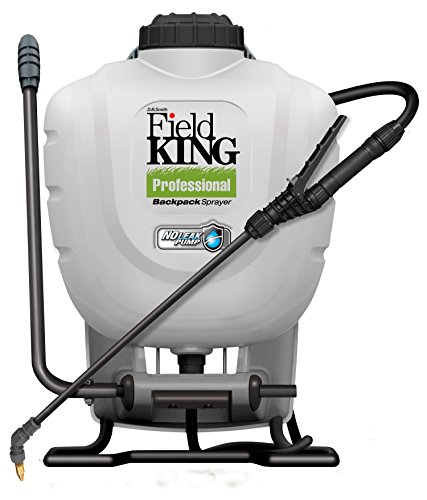 Field King backpack sprayerThe standard 4-gallon application tool
 3M 6300 half facepieceRespiratory protection, when the label calls for it
 Heavy-duty nitrile glovesChemical-resistant hand protection
PPE requirements come from each product label, which is the controlling legal document. These are common categories, not use guidance. The full kit page.