Guide
How to get your pesticide applicator certification
The real path to applicator certification: your state's EPA-approved plan, extension manuals as the study spine, category selection, the written exam, and the first steps to take this week.
Getting certified as a pesticide applicator is not complicated, but it is easy to waste time on if you do not understand who actually runs the process. People search for a federal license application and find nothing, because there is nothing to find. The federal government sets the standards; your state runs the program. Once that clicks, the whole path snaps into focus: find your state lead agency, get the right study manuals, pick your track and your categories, pass the written exam, and keep the credential current afterward. This guide walks that path in order, with the first concrete steps at the end.
A word on why the process deserves respect before we get into logistics. Certification exists because restricted use pesticides are the products regulators decided should only be in trained hands. The exam is not a bureaucratic toll booth; it is a check that you can read a label and follow it, protect yourself and the people around you, and understand the rules that govern the work. Applicators who approach the material that way pass more comfortably, and work more safely afterward, than the ones hunting for shortcuts and answer keys.
Everything below reflects the federal certification standards at 40 CFR Part 171 and the way state programs implement them in practice. Where states differ, and they differ constantly on logistics, this guide says so and points you to the one source that can settle any question for your situation: your state lead agency, operating under the certification plan EPA has approved for your state.
Step one: find your state's program
Every state administers applicator certification through a plan approved by EPA, and a designated state lead agency runs it day to day. In most states that agency sits inside the state department of agriculture, though the exact name and structure vary. This agency is the authority on everything operational: where and when exams are offered, how to register, what identification you need, what the current fees are, and how your credential will be issued. Find its pesticide certification pages first, before you buy anything or study anything, and bookmark them.
The lead agency's site will also tell you the things no general guide can, such as whether exams are offered on paper or by computer, whether you can walk in or must schedule ahead, and whether the state has reciprocity arrangements with its neighbors for applicators certified elsewhere. Ten minutes on the right agency page saves hours of secondhand guessing. If you cannot tell which agency runs certification in your state, call the main line of the department of agriculture and ask; they field that question constantly.
Alongside the lead agency, get familiar with your land-grant university's extension service. The division of labor in most states is clean: the agency regulates, examines, and issues credentials, while extension writes the training materials and often runs the training itself. You will deal with both before you are done, and knowing which one to call for which question keeps you off hold. Exam registration questions go to the agency; study material and training questions usually start with extension.
Step two: know which certification you are pursuing
The federal standards define two applicator types, and the tracks are studied and examined separately, so settle this before you order manuals. Private applicators use or supervise restricted use pesticides to produce an agricultural commodity on their own land or their employer's land: farmers, ranchers, growers, and their employees working the home operation. Commercial applicators are everyone else, from for-hire operators to groundskeepers to public agency staff. If your situation is not obvious, our guide comparing the two types walks through the definitions and the edge cases that catch people.
One eligibility item to clear early: both private and commercial applicators must be at least 18 years old under the federal standards. If you are younger and headed for this work, the time is not wasted. The manuals reward early study, and someone who has read the core material twice before their eighteenth birthday will find the exam far friendlier than someone cramming the week a new job suddenly requires the credential.
It is also worth knowing that the federal framework lets noncertified applicators work under the direct supervision of a certified applicator, subject to requirements. If you are starting a job before you can test, that arrangement may be how your first weeks are structured, with your employer's certified applicator responsible for the work you do. Treat it as the on-ramp it is meant to be: the goal of everything in this guide is to get you to a credential of your own.
Step three: get the manuals your state examines from
In most states, the study spine is published by the land-grant university's extension service. Extension programs write and maintain the core manual covering the material every applicator needs, along with category-specific manuals for commercial work, and in most states the exams are built from those manuals. This is the single most useful fact about preparing: the exam is not drawn from mystery material. There is a book, the book is the syllabus, and the people who wrote it belong to the same educational system that trains applicators in your state year after year.
Order the current editions through your extension service or wherever your lead agency directs, and confirm the edition matches what the exam currently uses, because manuals get revised. The core manual typically covers pest identification concepts, how to read and interpret a pesticide label, personal protective equipment concepts, environmental protection, storage and disposal, application equipment principles, and the laws and regulations that frame the work. Category manuals go deeper on the specific competency areas for each kind of commercial application.
Treat the label chapter as the heart of the book. Exams lean hard on label comprehension because the label is the legal instrument that governs every application you will ever make. If you can pick up an unfamiliar label and correctly locate its signal word, its use directions, and its restrictions, you are studying the way the exam thinks. The phrase to internalize early is the one every trainer repeats: the label is the law.
Use the category manuals differently than the core manual. The core is read cover to cover; a category manual is read against your actual work, with extra attention to whatever is newest to you. An applicator moving into a category adjacent to their experience should spend their hours on the unfamiliar half of the manual, not rereading what a decade of related work already taught them. The review questions tell you quickly which half is which.
Step four: commercial applicators, choose your categories
Commercial certification is organized by category, with each category matched to a kind of work and carrying its own competency standards. You certify in the categories your work requires, not in commercial application generally. The federal standards define the following categories, and your state may recognize additional categories of its own beyond this list.
- Agricultural pest control, for both crop and livestock work
- Forest pest control
- Ornamental and turf pest control
- Seed treatment
- Aquatic pest control
- Right-of-way pest control
- Industrial, institutional, and structural pest control
- Public health pest control
- Regulatory pest control
- Demonstration and research
- Sodium cyanide predator control
- Sodium fluoroacetate predator control
- Soil fumigation
- Non-soil fumigation
- Aerial application
Choose categories the way you would choose tools: by the work actually in front of you. Every category you hold is a category you studied for, tested into, and must keep current, so certifying in work you never perform buys obligation without any return. Most applicators start with the one or two categories their job requires and add others when real work appears. Your employer or your lead agency can confirm exactly which categories a given job demands, and it is a normal question to ask before you register for anything.
Step five: pass the written exam
Commercial applicators demonstrate competency by passing a written examination, and certifying authorities may add performance testing on top of the written requirement. In most programs a commercial applicator sits a core exam plus a separate exam for each category pursued, and private applicators in most states sit a written exam built on the private core manual. However your state structures the sitting, the material comes back to the same competencies: label comprehension, safety concepts, environmental responsibility, equipment principles, and the laws that govern the work.
Study method matters more than study hours. Read the core manual once straight through to see the shape of it, then a second time slowly, working the review questions at the end of each chapter honestly, on paper, before checking the answers. Practice exams earn their keep by exposing the difference between recognizing material and retrieving it, which is the difference the real exam tests. When your practice scores sit comfortably above the passing threshold your state publishes, book the exam rather than letting readiness decay while you wait to feel perfect.
On logistics, follow the lead agency's instructions exactly: registration windows, approved identification, and what you may bring into the room. If you fall short on a first attempt, find out what retake rules apply and treat the score report as a study map rather than a verdict. Most people who fail an applicator exam fail on the chapters they skimmed, not the chapters they found hard, and a focused second pass usually closes the gap.
Study to understand, not to memorize
Exam questions reward applicators who understand why a rule exists. Memorized answers evaporate under rephrased questions; understood concepts do not. If you can explain a chapter's main points to another person in your own words, you are ready for that chapter.
What it costs you in time
Plan the effort honestly. Most first-time applicators need several weeks of steady part-time study to be genuinely ready for a core exam, with additional time for each commercial category on top. The variable is background: someone who has worked around applications for years is consolidating knowledge they already half-hold, while a newcomer is building it from the foundation. Either way, consistent short sessions beat heroic cramming, and the deadline that actually matters is whatever exam date you put on the calendar. Book it, then study toward it.
After you pass
Passing the exam is the milestone, but the credential itself arrives on your state's terms: the lead agency issues it under the approved plan, and your certification is what authorizes you to use restricted use pesticides, or to supervise noncertified applicators doing so, within the scope you certified for. Read everything that comes with the credential. It tells you what you hold, which categories it covers if you are commercial, and, critically, when it expires.
That expiration date deserves immediate attention, because the renewal clock starts at issuance. Under the federal standard a certification expires five years after it is issued, and your certifying authority may set a shorter period. Renewal runs through either a fresh examination or an approved continuing education program, and the applicators who handle it painlessly are the ones who start logging approved training early instead of discovering the requirement in the final year. Put the expiration date in your calendar the day the credential arrives.
First steps this week
- Identify your state lead agency and read its certification pages end to end.
- Decide private or commercial based on whose land you will treat and for what purpose.
- If commercial, list the categories your actual work requires and confirm that list against your employer's needs or the agency's guidance.
- Order the current core manual, plus category manuals if commercial, through your extension service or wherever the agency directs.
- Read the first two chapters of the core manual and start a running list of unfamiliar terms.
- Find the exam schedule and set a target date far enough out to finish the manual twice.
- Confirm you meet the age requirement of 18 and gather whatever identification the agency requires for exam day.
None of those steps requires anyone's permission, and every one of them moves you closer to a credential that follows you for years. The applicators who get certified smoothly are almost always the ones who did the boring administrative reconnaissance first and then studied second, in that order.
| Stage | What happens | Who controls it |
|---|---|---|
| Standards | Two applicator types, age 18 minimum, competency requirements | The federal standards at 40 CFR Part 171 |
| Program | Exams, credentials, categories offered, logistics | Your state lead agency, under an EPA-approved plan |
| Study materials | Core and category training manuals, in most states | Land-grant extension services |
| Competency | Written exam, plus performance testing where required | You, with the current manual |
Certification is one of those tasks that looks bigger from the outside than it is from the inside. Strip away the acronyms and it is a defined body of material, a book that contains it, and a test that samples it, administered by an agency whose staff answer questions about it all day long. Work the steps in order and the process cooperates.
Once you pass, keeping the credential current becomes the long game, and our recertification guide covers the renewal cycle and the continuing education route most working applicators rely on. For the full picture of the certification process in one place, start below.
Get the full certification roadmap in one place
The certification map
One printable page: private vs commercial, every federal category, and the five-year clock with the exam-or-CE choice. Free.
No spam. One useful sheet and occasional notes.
The working kit (the label decides what you actually need)
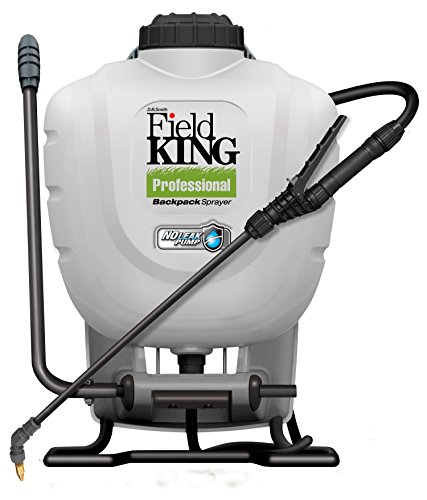 Field King backpack sprayerThe standard 4-gallon application tool
 3M 6300 half facepieceRespiratory protection, when the label calls for it
 Heavy-duty nitrile glovesChemical-resistant hand protection
PPE requirements come from each product label, which is the controlling legal document. These are common categories, not use guidance. The full kit page.