Guide
Certification for a lawn care business: the ornamental and turf path
The certification a lawn and landscape operator actually needs: the ornamental and turf category, when general use products keep you outside the requirement, pairing with right-of-way, and how to structure supervision for a crew.
A lawn care business is an application business. Strip away the trucks, the routes, and the scheduling software, and the core of the service is putting the right material on the right turf and ornamental plantings at the right time. So the certification question shows up early, usually the first time a supplier asks for a credential number, a commercial account requires proof of licensing, or a job calls for a product the counter will not sell without one. The good news is that the federal framework answers the question cleanly. There is a specific commercial category built for exactly this work, the requirement has a clear trigger, and the path through it is well worn. The less obvious news is that the smart answer for a growing business is rarely the bare minimum.
Start with the shape of the rules. The federal certification standards at 40 CFR Part 171 recognize two types of certified applicator: private applicators, who use or supervise restricted use pesticides to produce an agricultural commodity on their own or their employer's land, and commercial applicators, who are everyone else. A lawn care operator treating customers' properties is not producing an agricultural commodity and is not standing on their own or their employer's ground. That places the work squarely on the commercial side of the line whenever restricted use products are involved, no matter how small the company is or whether the operator thinks of the business as commercial in any other sense.
Commercial certification is organized by category, with each category carrying its own competency standards, and this is where the lawn and landscape trade gets its answer. This guide walks through the category that fits the work, explains when the federal requirement does and does not apply, covers the neighboring categories that growing operations often add, and then turns to the two questions that matter most for a business rather than an individual: how to structure supervision for a crew, and why certifying more people in more categories than the minimum is usually the better commercial decision. Your state lead agency runs the actual program under an EPA-approved plan, so it remains the final word on logistics, exams, and anything your state layers on top of the federal floor.
Ornamental and turf: the category built for this work
Among the federal commercial categories sits one named ornamental and turf, and it is the natural home for the lawn and landscape professional. The category covers pest control work in the settings this trade lives in: maintained turfgrass and the ornamental trees, shrubs, and plantings that surround homes, businesses, and grounds. When a lawn care operator certifies, this is almost always the first category on the credential, and in many operations it is the only one for years. The category exam builds on the commercial core material, then goes deeper into the competencies specific to turf and ornamental work, so the credential you earn actually maps to the problems you solve on a route.
It is worth pausing on why the category system works this way. The federal standards define a set of commercial categories, sixteen kinds of work in all, ranging from agricultural crop and livestock work through forestry, seed treatment, aquatic sites, rights-of-way, structural work, public health, regulatory and research roles, two specialized predator control categories, two fumigation categories, and aerial application. Nobody is examined on all of it. You test into the categories your work requires, and each category you hold is a category you must keep current. For a lawn business, that design is a gift: the ornamental and turf exam asks about the world you actually work in, not about grain fumigation or mosquito control, and your study time goes where your revenue comes from.
The credential itself follows the commercial rules. You must be at least 18 years old, and you demonstrate competency by passing a written examination, with certifying authorities free to add performance testing on top. In most states the study spine is the extension service's manuals: a core manual covering the material every commercial applicator needs, plus a category manual for ornamental and turf. Once issued, the certification runs on the federal renewal clock, expiring five years after issuance unless your certifying authority sets a shorter period, with renewal by examination or by an approved continuing education program. None of that is unique to lawn care, but all of it is the operating system your business credential runs on, so it belongs in the plan from day one.
When you do not need certification at all
Here is the part that surprises people in both directions. The federal certification requirement is triggered by restricted use pesticides. To use a restricted use product, or to supervise anyone using one, you must be a certified applicator. Products that are not classified restricted use do not trigger the federal requirement. A lawn care operation that runs entirely on general use products, and plenty do, can lawfully operate without anyone on staff holding a federal-standard certification, because the trigger never fires. That is not a loophole; it is the design. The restricted classification exists to put the higher-consequence products behind a competency check, and the products outside that classification sit outside the check.
Before anyone closes this tab and cancels their study plans, three cautions. First, the general-use-only position is a constraint on your service menu, not a permanent identity. The day a customer's problem calls for a restricted use product, or a supplier relationship, a commercial contract, or a bid specification demands a certified applicator, the business either turns the work away or has the credential ready. Businesses that wait for that day to start studying lose the work to whoever prepared earlier. Second, states run their own programs on top of the federal floor, and what your state requires of a for-hire application business can reach further than the federal trigger. Never assume the federal minimum is the whole story; confirm with your state lead agency before you build a business plan on going uncertified. Third, even where no credential is legally required, every application is still governed by the product label, which brings us to the one rule that never has an exception.
The label is the law
Certification decides who may use restricted use pesticides. The label decides how every pesticide may be used, general use products included. No credential, and no absence of a credential, ever authorizes an application that conflicts with the label. A lawn business that trains every technician to read and follow the label is meeting its first legal duty and its first professional one at the same time.
What pulls a lawn business into the requirement
In practice, a few recurring situations move a lawn and landscape operation from the general-use-only world into certified territory. They are worth naming specifically, because each one tends to arrive as an opportunity rather than a regulation, and the businesses that see them coming treat certification as capacity built in advance rather than paperwork done under deadline.
- A pest or weed problem on a customer property that the available general use products do not adequately address, where the appropriate tool is a restricted use product
- Commercial, institutional, or municipal contracts that specify certified applicators as a condition of bidding, regardless of which products the work ends up using
- Supplier and distributor relationships that open fuller product lines and better technical support to credentialed businesses
- Expansion into adjacent service lines, such as vegetation management or structural work, that carry their own category requirements
- Hiring plans that depend on the supervision provisions, which only function when a certified applicator exists to do the supervising
- A competitive market where the certified credential itself has become part of how customers and general contractors sort bidders
Notice the pattern: most of these are pulled by growth, not pushed by enforcement. A one-person operation mowing and treating a short residential route with general use products can stay outside the requirement for a long time. The same operation two years later, bidding grounds maintenance for a school campus and quoting a homeowners association on tree and shrub care, is living in a different world, and the credential is usually the cheapest ticket into it. The certification did not become legally required for every job on the calendar; it became commercially required for the jobs worth winning.
Pairing ornamental and turf with right-of-way
Once the first category is earned, the question becomes which category is second, and for lawn and landscape operations the most natural pairing is right-of-way. The right-of-way category covers vegetation management along the corridors that crisscross every service area: roadsides, utility easements, and similar strips of ground where the job is controlling vegetation rather than cultivating a customer's lawn. The work is adjacent to what a landscape crew already does, the equipment and plant knowledge overlap heavily, and the customers, utilities, municipalities, and contractors managing those corridors, tend to be exactly the kind of steady, contract-driven accounts that smooth out a residential route's seasonality.
The reason the pairing requires a second category rather than a stretched first one is the same reason the category system exists at all. Ornamental and turf competency is about maintaining desirable plantings while controlling pests within them. Right-of-way competency is largely the inverse problem, managing vegetation across long, mixed, often environmentally sensitive corridors, and the federal standards treat it as its own body of knowledge with its own exam. An operator certified in one is not certified in the other, and bidding right-of-way work on an ornamental and turf credential is operating outside the scope of the category held. The fix is cheap relative to the opportunity: study the category manual, sit the additional exam, and the credential grows to match the bid list.
The same logic extends to other adjacencies as the business diversifies. An operation that takes on ponds and stormwater features will meet the aquatic category. One that picks up work on wooded acreage will meet the forest category. Each addition follows the identical pattern: identify the category that governs the new work, ask your state lead agency to confirm the match, study the category material, and test in before the work begins. Businesses that treat category exams as a routine part of opening a service line, the way they treat buying the equipment for it, never find themselves improvising credentials after a contract is already signed.
For-hire structural work is a different category entirely
One adjacency deserves its own warning, because it is the one lawn care businesses drift into most casually: structural pest control. A customer who trusts you with their lawn will eventually ask about ants in the kitchen, wasps in the eaves, or mice in the garage, and it is tempting to treat that request as a small add-on to an existing visit. In the federal category system it is nothing of the kind. Pest control in and around structures belongs to the industrial, institutional, and structural category, a separate body of competency with its own exam, covering work inside and against buildings rather than across landscapes. An ornamental and turf credential does not reach it.
The right way to handle the drift is a deliberate decision. Either the business adds the structural category properly, with the study and examination that entails, and stands up a real structural service line, or it declines the work and refers it to a structural operator, possibly one who returns the favor with lawn referrals. What a well-run business does not do is let technicians improvise structural treatments on the margins of a turf route. The category line is also a competency line: the exam exists because buildings, the people in them, and the pests that infest them present different problems than turfgrass does, and the federal framework declines to assume that skill in one implies skill in the other.
Building the supervision structure for a crew
Now to the question that separates a certified individual from a functioning business: the crew. The federal framework does not require every person who physically applies a restricted use pesticide to hold a certification. It allows noncertified applicators to use restricted use products under the direct supervision of a certified applicator, subject to specific supervision requirements. This provision is what makes a multi-technician lawn care company possible before every hire has tested in, and it is also where the responsibility in the company concentrates, because every supervised application traces back to the certified applicator supervising it.
Treat that structure as an organizational design problem. A company with one certified applicator and six technicians has built a business on a single point of failure. If that one credential lapses, or that one person leaves, is out sick in the peak season, or simply cannot be meaningfully connected to the work of six trucks at once, the restricted-use side of the business stops being lawful the moment supervision stops being real. The supervision provisions are a bridge for training new people, not a permanent architecture for staying thin on credentials. The requirements attached to direct supervision exist precisely so the arrangement cannot dissolve into a certificate in a drawer at the office while unsupervised crews make judgment calls in the field.
The durable pattern in well-run application businesses looks like this instead. Every technician starts as a noncertified applicator under the direct supervision of a certified applicator, with the supervision treated seriously: the certified applicator is genuinely available, genuinely directing the work, and genuinely accountable for it. From the first week, each technician is also studying toward certification, with the company supplying manuals, study time, and exam fees. Within a season or two, the route staff who handle restricted use products hold their own credentials, and supervision becomes the on-ramp for the next hire rather than the operating mode of the whole company. The certified applicator count becomes a number the owner tracks the way they track truck count, because it is exactly as much a measure of capacity.
- Know at all times who is certified, in which categories, and when each certification expires
- Assign every noncertified technician to a specific certified supervisor, and keep that link real rather than nominal
- Fund manuals, study time, and exam fees for every technician on a restricted-use route
- Set the expectation at hiring that certification is part of the job's progression, not an optional extra
- Track renewal dates and continuing education credits centrally, so no credential quietly runs out mid-season
- Add category exams ahead of new service lines, not after the first contract is signed
The business case for certifying past the minimum
Everything above describes the minimum lawful shapes a lawn care business can take. The closing argument is that the minimum is usually the wrong target. Certification, for an application business, behaves like capacity: each certified applicator is a person who can run a restricted-use route independently, supervise new hires, sign off where contracts demand a credential, and keep the schedule intact when someone else is unavailable. Companies discover the value of surplus capacity at exactly the moments they cannot buy it quickly, because a certification takes study and an exam date, not a purchase order, and the busy season does not pause while a replacement credential is earned.
Redundancy is the first return. Two certified applicators mean a vacation, an illness, or a resignation is an inconvenience instead of a shutdown. The second return is reach: every additional category held across the staff is a service line the company can lawfully quote tomorrow. The third is the market signal. Commercial customers, property managers, and municipalities sort vendors partly by credentials, and a company that can put multiple certified applicators on a bid reads as an established operation in a way a single certificate does not. And the fourth is internal: technicians who are supported through certification stay longer and perform better, because the company has visibly invested in them and because the study itself makes them sharper diagnosticians on every lawn they walk.
The renewal system rewards the same posture. Certifications expire five years after issuance under the federal standard, sooner where a certifying authority sets a shorter period, and renewal runs through either reexamination or an approved continuing education program. A company that treats continuing education as a normal, budgeted part of the year, sending its certified staff to approved training as a team, keeps every credential current without drama and keeps its people learning besides. A company that treats renewal as each individual's private problem finds out about lapses after they happen, usually from a supplier or an inspector rather than from the calendar.
| Business situation | What the federal framework asks | The practical move |
|---|---|---|
| General use products only, residential route | No federal certification trigger | Confirm state requirements with the lead agency; start studying before growth demands it |
| Any restricted use product in the service | Certified commercial applicator, ornamental and turf category | Certify the owner or lead technician first; build from there |
| Crew members applying restricted use products | Certification, or direct supervision by a certified applicator | Use supervision as the on-ramp; move every technician toward their own credential |
| Vegetation management contracts | Right-of-way category | Add the category exam before bidding the work |
| Pest work in and around buildings | Industrial, institutional, and structural category | Add the category properly or refer the work out; never improvise it |
The path, condensed: decide whether restricted use products belong in your service, and if they do, certify in ornamental and turf through your state program. Build supervision deliberately while your technicians earn credentials of their own. Add right-of-way, structural, or other categories as real work appears on the horizon, and add them before the contracts arrive. Keep every renewal date on a company calendar and feed the continuing education requirement all year instead of all at once. None of it is complicated, and all of it compounds: the credential earns work, the work justifies more credentials, and the company that comes out of that loop is harder to compete with every season.
If you are starting from zero, the mechanics of getting that first certification, finding your state lead agency, getting the extension manuals, and passing the written exam, are covered start to finish in our certification guide below.
See the full certification process, from first manual to passing score
The certification map
One printable page: private vs commercial, every federal category, and the five-year clock with the exam-or-CE choice. Free.
No spam. One useful sheet and occasional notes.
The working kit (the label decides what you actually need)
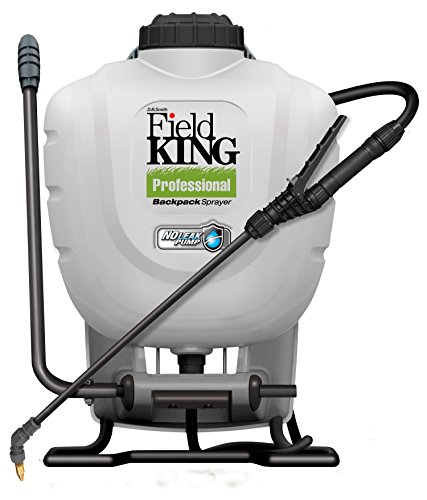 Field King backpack sprayerThe standard 4-gallon application tool
 3M 6300 half facepieceRespiratory protection, when the label calls for it
 Heavy-duty nitrile glovesChemical-resistant hand protection
PPE requirements come from each product label, which is the controlling legal document. These are common categories, not use guidance. The full kit page.