Guide
Applicator recertification: the five-year federal clock and the CE alternative
How applicator renewal actually works: the five-year federal ceiling, shorter cycles where authorities set them, the exam-or-CE choice, credit tracking habits, and what a lapse really costs.
A pesticide applicator certification is not a one-time achievement. Under the federal standards, a certification expires five years after it is issued, and a certifying authority is free to set a shorter period than that. Renewal, in other words, is built into the credential from the day you earn it, and the applicators who handle it well are the ones who treat recertification as an ongoing habit rather than a deadline emergency. This guide covers the federal clock, the two renewal routes, the tracking habits that keep a certification alive, and what actually happens when one lapses.
The structure is worth understanding precisely, because misremembering it is common. Five years is the federal maximum, not a universal promise. Your actual cycle is set by your certifying authority under its EPA-approved plan, and that cycle can be shorter than five years. The expiration date printed on your credential outranks anything you read in a general guide, including this one. Everything else in the renewal system hangs off that date, so the first habit of a well-managed certification is simply knowing yours cold.
The second thing to fix in your mind is that there are exactly two ways to renew: pass a written examination again, or complete an approved continuing education program, as provided in your authority's EPA-approved plan. That choice, exam or CE, shapes how working applicators plan the whole cycle, and it is where this guide spends most of its time, because choosing deliberately beats defaulting into whichever path is left when the clock runs short.
The five-year federal ceiling
The federal certification standards set expiration at five years after issuance. States and other certifying authorities administer certification through their own EPA-approved plans, and those plans may set a shorter period. The practical consequences follow directly: never assume your cycle from a colleague's, especially a colleague certified under a different authority, and never assume the cycle you started with is the cycle you will always have, because plans get amended. When your credential is issued or renewed, read the expiration date off the document itself and put it in every calendar you use.
Note also what the clock attaches to under the federal standard: issuance. The countdown runs from when the certification is issued, not from when you started working or when you first needed the credential. Your authority's plan governs the finer details of how dates are set and renewed, which is one more reason to read your own paperwork rather than borrow assumptions. Applicators certify at different times, so renewal dates scatter across the calendar, and relying on the general chatter of colleagues and suppliers to remind you is a system designed to fail quietly.
It helps to know who the phrase certifying authority points to. For most applicators it is the state lead agency running the EPA-approved plan they certified under, and that agency is the source of record for cycle length, credit requirements, and renewal procedure. Whatever this guide or any other says in general terms, the plan your authority operates under is the version that binds you. A short call, or a careful read of the agency's recertification pages at the start of a cycle, costs minutes and removes every assumption from your plan.
Commercial applicators carry one extra layer: categories. Your certification covers the categories you tested into, and your authority's plan governs how each of them is kept current through the cycle. When you plan a renewal, plan it for everything you hold, not just the core credential, and if you have accumulated categories you no longer use, renewal time is the natural moment to decide whether they are worth carrying for another cycle.
Route one: retake the exam
The first renewal route is the direct one: sit the written examination again and pass it. For applicators who let a certification lapse, who moved between authorities, or who simply prefer a single test day over tracked coursework, retesting is a clean reset. It also has a quiet advantage that deserves more credit than it gets: preparing for a fresh exam forces a full pass through the current manuals, which catches changes in the material that an applicator coasting on old knowledge would never notice.
The tradeoff is concentration of risk. An exam is a single event with a passing bar, taken on whatever material is current, and it lands during whatever season your renewal happens to fall in, busy or not. Applicators who choose retesting should treat it exactly like the original exam: current-edition manuals, honest practice questions, and a booked date with margin before the credential actually expires, so that a stumble on the first attempt is a recoverable event instead of a lapse.
Route two: continuing education
The second route is completing an approved continuing education program, as provided in your authority's EPA-approved plan. In practice this means accumulating approved training across the cycle: sessions, workshops, meetings, and courses that the authority has approved for recertification credit, in the amounts and mixes its plan requires. Instead of proving competency all at once on an exam day, you demonstrate ongoing engagement with the material across the working life of the certification.
Talk to working applicators and you will find that most of the ones you meet renew through continuing education, and the reason is unglamorous: convenience. CE spreads the renewal effort across the cycle in small pieces instead of concentrating it into one high-stakes sitting. The sessions often coincide with meetings and trainings applicators attend anyway, the material stays current because it arrives continuously, and there is no single day on which an off morning can cost you your credential. For someone applying every season, steady CE fits the shape of the job.
What counts for credit is defined by your authority, but the general texture is consistent: structured education tied to the competencies the certification stands on, delivered by sponsors the authority has approved, with attendance documented. Category-specific training matters for commercial applicators, since authorities can require credits tied to the categories you hold, not just a general total. Before you count any session toward renewal, confirm it carries approval from your authority, because an interesting afternoon that was never approved advances your knowledge and not your renewal.
There is also a compounding benefit to the CE route that has nothing to do with paperwork. The sessions put you in rooms with other applicators, extension educators, and agency staff on a regular basis, which is where practical knowledge actually circulates: what problems other operations are seeing, how rules are being interpreted, what is changing in the manuals before the next edition prints. Applicators who renew by exam get one concentrated refresher per cycle; applicators on the CE route get a steady drip of current knowledge along with the credits.
CE has its own discipline. Credits must come from approved sources, in the right amounts, within the current cycle, and they must be documented. The applicators who get burned on the CE route are almost never the ones short on interest in the material; they are the ones who assumed someone else was counting. Which brings us to tracking, the unglamorous core of the whole system.
Tracking credits across a cycle
Five years is a long time to keep score casually, and a shorter cycle only compresses the same problem. The reliable pattern is boring: one file, updated the same day you attend anything. Whether that file is a folder, a spreadsheet, or a notes app on your phone matters far less than the habit itself. Record what the session was, who sponsored it, the date, and the credit value as approved, and keep whatever certificate or attendance confirmation the sponsor provides alongside the entry.
Then audit yourself once a year. Compare what your file says against what your authority's records show, because the authority's count is the one that decides your renewal, and reconciling annually turns a potential end-of-cycle crisis into a small correction. If a session you attended never made it into the official count, a year-old discrepancy is fixable with a phone call and a certificate; discovering the same gap in the closing weeks of your cycle is not a position you want to negotiate from.
- Log every session the day you attend it, while the details are fresh and the paperwork is in hand.
- Keep certificates and attendance confirmations together in one place, physical or digital.
- Record the approved credit value, not your guess at it.
- Reconcile your file against the authority's records once a year.
- Front-load credits early in the cycle so late-cycle schedule chaos cannot sink the renewal.
- When you change employers, take your training records with you; they belong to your certification, not to the company.
Do not outsource the calendar
Renewal notices are a courtesy, not a guarantee. Mail goes to old addresses, employers change, and reminder systems miss people. The expiration date on your credential is your responsibility alone, and a notice that never arrived is not a defense that renews anything.
What happens if you lapse
Let a certification expire and the consequence is immediate and simple: you are no longer a certified applicator. The activities that required certification, using restricted use pesticides and supervising their use, are no longer available to you until you are certified again. For a private applicator that can idle work on your own operation at the worst possible point in the season. For a commercial applicator it can mean stepping off routes and contracts, or dropping into supervised status under a certified colleague, if the business even has one positioned to absorb the load.
The path back is set by your authority, and it is generally less pleasant than renewal would have been. Where renewal offered a choice between examination and continuing education, coming back from a lapse commonly runs through examination, and any grace arrangements are whatever your authority's plan provides and nothing more. The safe assumption is that a lapse means starting the proving process over, which is exactly why the dull tracking habits above are worth more than they appear to be.
One trap deserves its own warning: discovering an expired credential mid-season and hoping to bridge the gap informally. The supervision provisions that let noncertified applicators work under a certified applicator are a real mechanism, but leaning on a colleague's credential because yours lapsed converts your independence into their responsibility, and it only works at all where the supervision requirements are actually met. It is a stopgap, not a plan, and it does nothing whatsoever to renew you.
There is also a professional dimension. Employers, customers, and regulators all read a lapsed credential the same way: a controls failure on a licensed activity. Fair or not, an applicator who let a certification quietly expire invites questions about what else in the operation is quietly expiring. Renewing on time is cheap insurance for a reputation that took years to build.
Planning the cycle like a project
Treat the cycle as a project with a known deadline. In the first year after certification or renewal, find out which recurring events in your area carry approved credit and put them on the calendar as standing appointments. Aim to bank the bulk of your required credits well before the final year, leaving the tail of the cycle as buffer rather than as the plan. Applicators who finish their credits early renew calmly; applicators who plan to finish exactly on time renew sometimes.
If your work spans multiple categories, learn how your authority credits category-specific training and watch each bucket, not just the total. If you hold credentials from more than one authority, run a separate file and a separate calendar entry for each, because their cycles, requirements, and counts are fully independent, and nothing about one renewal transfers to another unless the authorities themselves say so. And if you genuinely prefer test days to meeting rooms, the exam route remains open every cycle; the point is to choose your route at the start of the cycle, not to discover it at the end.
Finally, tie renewal to something you already do. Applicators who bolt their annual credit reconciliation onto an existing yearly ritual, closing the books, winter equipment maintenance, the first planning meeting of the year, actually do it, because the trigger already exists. A renewal system that depends on remembering something new is weaker than one that rides on a habit you have kept for years.
| Renewal route | What it involves | Where it fits |
|---|---|---|
| Written examination | Pass the current exam again before expiration | Lapsed credentials, fresh starts, applicators who prefer one decisive test day |
| Continuing education | Complete an approved CE program across the cycle | Working applicators who can attend approved training as they go |
The renewal system is genuinely reasonable: a five-year federal ceiling, a shorter cycle only where your authority sets one, and a choice between retesting and steady continuing education. It punishes exactly one thing, inattention, and it rewards the dull habits of writing down your date, logging your credits, and reconciling once a year. Build those habits in your first cycle and every renewal after that is administrative background noise instead of a scramble.
If you are still ahead of your first certification rather than your first renewal, start with the process itself: which applicator type you need, what to study, and how the exam works. The guide below covers the whole path from the beginning.
New to certification? Walk through the whole process step by step
The certification map
One printable page: private vs commercial, every federal category, and the five-year clock with the exam-or-CE choice. Free.
No spam. One useful sheet and occasional notes.
The working kit (the label decides what you actually need)
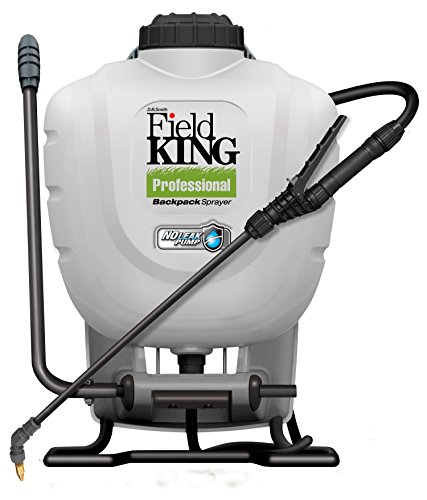 Field King backpack sprayerThe standard 4-gallon application tool
 3M 6300 half facepieceRespiratory protection, when the label calls for it
 Heavy-duty nitrile glovesChemical-resistant hand protection
PPE requirements come from each product label, which is the controlling legal document. These are common categories, not use guidance. The full kit page.