Guide
Studying for the applicator exam: the extension manual method
How to prepare for a pesticide applicator exam using extension study manuals, label reading practice, and structured self-testing, plus what to expect on exam day.
There is a right way to study for a pesticide applicator exam, and it is not a secret. In most states, the exam you will sit for is built alongside a set of study manuals published by the land-grant university extension service, and the exam questions draw on the material those manuals teach. This means applicator exam preparation is unusually well defined compared to most professional tests: the source material is identified, inexpensive, and written specifically to prepare you. The people who struggle are usually not the people who found the material too hard; they are the people who studied the wrong things, skimmed instead of worked, or walked in relying on field experience alone.
This article lays out a complete study approach: why the extension manuals are the spine of your preparation, why label comprehension is the core skill the exam is really testing, a study sequence that builds from the core manual outward, self-testing techniques that tell you when you are actually ready, and what to expect when you sit down for the exam itself. The framework here is federal; the specifics of your exam, from format to scheduling, come from your state lead agency, and confirming those details is part of the method.
Why extension manuals are the spine
Every state runs its certification program through a lead agency operating an EPA-approved plan, and in most states, that agency works with the land-grant university's extension service to produce the training materials. The result is a set of manuals with an unusual property: they are written by educators, in the same state system that administers your exam, specifically to convey the competencies the exam verifies. This is not test-prep material reverse-engineered from question banks. It is the curriculum the test was built to assess. When the manual spends a chapter on a topic, that is a signal about what the exam considers important.
The manuals typically come in two layers that mirror the structure of certification itself. A core manual covers the knowledge every applicator needs regardless of specialty: pest identification principles, how pesticides work, the label, formulations, protective equipment, drift, storage, spill response, environmental protection, and the legal framework. Category manuals then cover the specific competencies for each certification category, from turf to fumigation to aerial work. Your exam structure will generally mirror this: a core exam plus an exam for each category you seek, which is exactly why the manuals are organized the way they are.
Treat the manuals as workbooks, not reading assignments. Extension manuals are dense in a particular way: nearly every paragraph states something testable, so passive reading produces the illusion of familiarity without the reality of recall. Work through them with a pen. Answer the review questions at the end of each chapter in writing. Mark every term you could not define cold. The goal of a first pass is not to finish the book; it is to build an honest map of what you know and what you do not.
Label comprehension is the real test
Strip away the topic headings and most applicator exams are testing one underlying skill from many angles: can you read a pesticide label and correctly extract what it requires of you? This follows directly from how the legal system works. The label is the legal instrument that governs every application, and using a product in a manner inconsistent with its labeling is unlawful. An applicator who can read a label accurately can handle situations no manual anticipated, because the answer to most field questions is on the label. The exam knows this, which is why so many questions are, one way or another, label questions.
Study the anatomy of a label until you can navigate it without hunting. Know where to find and how to interpret the classification statement that marks a restricted use product, the signal word that communicates the hazard tier, the precautionary statements, the personal protective equipment requirements, the environmental hazards section, the directions for use, the sites and pests the product covers, and the storage and disposal instructions. Then practice the skill the exam actually simulates: given a label excerpt and a scenario, determine what is required, what is permitted, and what is prohibited. That determination, repeated across contexts, is the core of the test.
A useful habit: whenever a practice question stumps you, ask which part of the label would have answered it. Training yourself to route questions through the label mirrors both the exam's logic and the job's. The competency being certified is not memorization of facts about pesticides in general; it is the disciplined use of the specific legal document that accompanies every product.
- Locate the classification statement and know what restricted use status means for purchase and application.
- Read signal words and precautionary statements as a hazard communication system, not decoration.
- Extract protective equipment requirements exactly as stated, without adding or subtracting.
- Find the environmental hazard statements and connect them to site conditions like water, pollinators, and drift risk.
- Use the directions for use to determine whether a product may be applied to a given site for a given pest.
- Check storage, disposal, and post-application restrictions before considering any scenario resolved.
A study sequence that works
Order matters. The material builds on itself, and studying it in the wrong order wastes passes through the books. The sequence that works runs core manual first, category manuals second, and full-label practice third, with self-testing woven through all of it.
Start with the core manual and work it completely before touching category material. Everything in the category manuals assumes the core: category chapters discuss drift assuming you know what drift is, reference protective equipment assuming you know the categories of it, and cite label sections assuming you can find them. Reading category material first means encountering applications of concepts you have not built yet. Give the core manual a full working pass, chapter review questions and all, and do not move on until the marked list of terms you cannot define has been driven close to empty.
Then move to the category manual for each certification you seek. These are shorter and more concrete than the core manual, focused on the pests, sites, equipment, and hazards of one kind of work. If you have field experience in the category, expect a comfortable read with scattered surprises, and pay closest attention to the surprises, because the gap between how work is commonly done and what the manual teaches is exactly where exams find their questions. If you lack field experience in the category, slow down and let the manual build the picture; the exam does not assume you have held the equipment, only that you know what the manual teaches about it.
Finish with full labels. Get complete specimen labels, the longer and more complex the better, and read them end to end against a checklist: classification, signal word, protective equipment, environmental hazards, use directions, storage and disposal. Then quiz yourself scenario-style: could this product be used on this kind of site, what would the applicator be required to wear, what conditions would rule the application out. Reading whole labels is qualitatively different from reading excerpts, because real labels are long, repetitive in places, and organized in ways that take practice to navigate quickly. That navigation speed pays off directly on exam day.
Self-testing: proof before the proof
The single most reliable finding in learning research is that retrieval beats review: testing yourself on material strengthens memory more than rereading it. Applicator exam preparation should be built around this. Every chapter's review questions get answered in writing, from memory, before you check the text. Flashcards, whether paper or app-based, carry the vocabulary load: pesticide terminology is a genuine language, and terms like formulation types, exposure routes, and label sections need to be automatic so exam questions can be read quickly and accurately.
Add two habits that separate ready candidates from hopeful ones. First, closed-book chapter summaries: after finishing a chapter, put the manual away and write out, from memory, everything important in it, then compare against the book and note what fell through. The comparison is the study event; the gaps it exposes are your next session's agenda. Second, spaced returns: revisit each chapter's questions again after a gap of days rather than piling all review into the final stretch. Material recalled successfully after a gap is material you own. When you can work through the review questions of every relevant chapter cold, and read an unfamiliar label and answer scenario questions about it without hunting, you are ready. Practice exams that mimic the format, like the ones this site provides, then serve as a final calibration rather than a substitute for the manuals.
Structuring the weeks of study
How long preparation takes depends on your background, the number of categories you are pursuing, and how much of the material is genuinely new, so resist any urge to copy someone else's timeline. What matters is structure. Short, regular sessions beat occasional marathons for this kind of material, because the manuals reward steady accumulation and the retrieval practice described above needs gaps between sessions to do its work. Set a consistent slot, keep each session focused on one chapter or one label, and end every session by writing down the specific items that need another look. That running list becomes the agenda for review sessions, and it keeps late-stage studying pointed at actual weaknesses instead of comfortable rereading.
Sequence the calendar backward from your exam date once your state lead agency confirms scheduling. The final stretch before the exam should contain no new material at all: it is for review of the marked-item list, timed practice runs, and full-label reading drills, because introducing new chapters late produces anxiety without producing retention. If you are testing for the core exam plus several category exams on the same day, rehearse that endurance at least once by working practice material for all of them in a single sitting. And if scheduling allows a choice, some candidates prefer splitting core and category exams across separate visits; check what your state permits and decide based on how your practice sessions have felt rather than on optimism.
What to expect on exam day
The federal standard sets the baseline: commercial applicators demonstrate competency through written examination, and certifying authorities may add performance-based testing for certain categories. Beyond that baseline, format details belong to your state. Exams may be on paper or on a computer, at testing centers or agency offices, scheduled or walk-in, and policies differ on time limits, reference materials, and how soon results arrive. None of this should be a surprise on the day: your state lead agency publishes its exam logistics, and confirming them is part of preparation. Expect to present identification, expect a proctored setting, and expect one exam covering core material plus a separate exam for each category you are pursuing.
The questions themselves will feel familiar if you did the work above: mostly multiple choice in style, drawn from the competency areas the manuals cover, with a healthy share of label-based and scenario-based items that describe a situation and ask what is required or what went wrong. Read stems carefully, because pesticide questions turn on precise words: always, never, first, best. Eliminate clearly wrong options before choosing among the plausible ones, answer everything unless your state's instructions say otherwise, and resist changing answers without a concrete reason; first readings informed by solid preparation are usually right.
If a category exam goes badly, the system is forgiving in structure: retake policies exist everywhere, with waiting periods and procedures set by the state. But walking in prepared is cheaper than walking in twice. The manuals are the exam's own source material, label comprehension is its core skill, and honest self-testing tells you when you have actually crossed the line from familiar to known. Certification then holds for the period your authority sets, up to the federal five-year maximum, with recertification available by exam or approved continuing education, so the study habits you build now will get used again.
Confirm with your lead agency
Exam format, scheduling, retake rules, and study manual editions all come from your state lead agency and its extension partner. Before you set a study calendar, get the current manual list and exam logistics from the official source for your state.
Put your preparation to the test with category-specific practice exams
The certification map
One printable page: private vs commercial, every federal category, and the five-year clock with the exam-or-CE choice. Free.
No spam. One useful sheet and occasional notes.
The working kit (the label decides what you actually need)
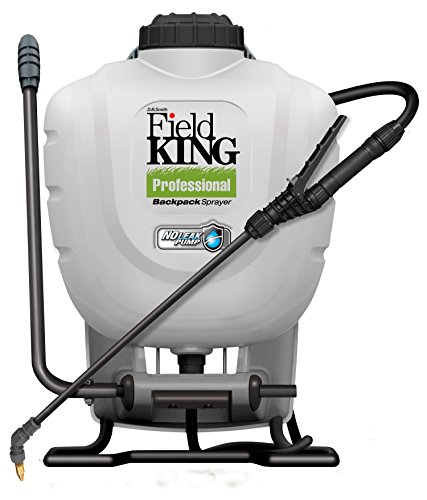 Field King backpack sprayerThe standard 4-gallon application tool
 3M 6300 half facepieceRespiratory protection, when the label calls for it
 Heavy-duty nitrile glovesChemical-resistant hand protection
PPE requirements come from each product label, which is the controlling legal document. These are common categories, not use guidance. The full kit page.