Guide
Private or commercial applicator: which certification do you need
The two federal applicator types explained in plain terms: who each covers, how the exam requirement works, the supervision alternative, and a decision list for farm and for-hire scenarios.
If you plan to buy, use, or supervise the use of restricted use pesticides, federal law says you need to be a certified applicator. That much is settled. The question that trips people up is which kind of certification applies to them, because the federal standards recognize exactly two types: private applicators and commercial applicators. The line between them has nothing to do with how much product you apply, how big your operation is, or how experienced you are. It comes down to two things: what you are producing and whose land you are treating. Get those two facts straight and the answer usually falls out on its own.
This distinction matters more than most first-time applicators expect. The two certifications are earned differently, examined differently in most states, and carry different obligations. Choose wrong and you can waste weeks studying the wrong manuals, sit for an exam you did not need, or worse, operate outside the scope of the credential you actually hold. A private certification does not stretch to cover for-hire work, and holding a commercial certification you never needed means carrying category exams and renewal obligations that were never required of you in the first place.
This guide walks through both certification types as the federal standards define them, explains the exam requirement, covers the supervision alternative that lets noncertified workers apply restricted use pesticides under a certified applicator, and finishes with a plain decision list plus the farm and for-hire scenarios that come up most often. Everything here reflects the federal certification standards; your state implements those standards through its own EPA-approved certification plan, so your state program is always the final word on logistics.
What certification actually covers
Certification exists because some pesticides are classified as restricted use. These are the products the Environmental Protection Agency has determined should only be handled by people who have demonstrated competency, because misuse carries real consequences for the applicator, for bystanders, for crops and livestock, and for the environment. To use a restricted use pesticide, or to supervise anyone who uses one, you must be a certified applicator. Products that are not classified restricted use do not trigger the federal certification requirement, which is why plenty of people apply general use products for years without ever sitting an exam.
The legal machinery works in two layers. The federal standards, found at 40 CFR Part 171, set the floor: the two applicator types, the minimum age, the competency requirements, and the outer limit on how long a certification lasts. States then run the actual programs through certification plans approved by EPA. Your state lead agency administers the exams, issues the credentials, and enforces the rules. So while the two-type structure is federal and identical everywhere, the scheduling, testing logistics, and paperwork in front of you belong to your state program.
The private applicator, in plain terms
A private applicator is certified to use or supervise the use of restricted use pesticides for the purpose of producing an agricultural commodity on their own land or on their employer's land. Read that definition slowly, because every word does work. There is a purpose test: the application has to be part of producing an agricultural commodity. And there is a land test: the property has to be yours or your employer's. Meet both tests and the private certification covers you. Fail either one and you are looking at the commercial side of the line.
Producing an agricultural commodity is a broad idea in practice. Row crops, forage, orchards and vineyards, vegetables, livestock, and similar farm production all live under it. The point of the private category is to cover the person whose pesticide use is a normal part of farming: the grower treating a field ahead of the crop, the rancher dealing with pests that threaten the herd, the orchardist protecting a planting. The certification recognizes that farmers routinely need restricted use products as production tools on their own operations and gives them a direct, lawful path to use them.
The employer's-land language matters for farm employees. A full-time hand on a farm who applies restricted use pesticides as part of producing that farm's commodities fits the private definition, because the work happens on the employer's land and in service of the employer's production. The employee can pursue private certification, or, as covered below, work as a noncertified applicator under the direct supervision of someone who is certified. What the private definition never covers is treating land that is neither yours nor your employer's. Questions about leased or rented ground are exactly the kind of detail to confirm with your state lead agency before you assume anything.
- A grower treating their own fields to protect a crop they will harvest and sell
- A rancher using restricted use products as part of livestock production on their own operation
- A farm employee applying to the employer's ground as part of that farm's production
- An orchard or vineyard owner managing pests in their own plantings
- A family member working in the family operation who becomes certified and treats the operation's own land
The commercial applicator, in plain terms
The commercial applicator is everyone else. If you use or supervise the use of restricted use pesticides and you do not fit the private definition, you are a commercial applicator. Notice what the label does not say: it does not require that you charge for the work, run a business, or apply for hire. Commercial is simply the catch-all for any use of restricted use pesticides outside of producing an agricultural commodity on your own or your employer's land. Plenty of commercial applicators never send an invoice in their working lives.
That catch-all covers the lawn and landscape professional, the custom applicator treating other people's farms, the structural pest control technician, the utility crew keeping rights-of-way clear, the public health worker managing disease vectors, the fumigator at a storage facility, and the grounds staff at schools, parks, and institutions. It also covers government employees whose jobs involve restricted use pesticides. The common thread is that the work is done on someone else's behalf or for a purpose other than producing your own agricultural commodity, and so the competency bar is organized and examined differently.
Commercial certification is organized by category. Instead of one general credential, a commercial applicator is certified in the specific kinds of work they perform, and each category has its own competency standards. The federal standards define a core set of categories, and states may add categories of their own on top. You test into the categories that match your actual work, which is what keeps a right-of-way applicator from having to master aquatic pest control, and vice versa.
- Agricultural pest control, covering both crop and livestock work
- Forest pest control
- Ornamental and turf pest control
- Seed treatment
- Aquatic pest control
- Right-of-way pest control
- Industrial, institutional, and structural pest control
- Public health pest control
- Regulatory pest control
- Demonstration and research
- Sodium cyanide predator control
- Sodium fluoroacetate predator control
- Soil fumigation
- Non-soil fumigation
- Aerial application
Your state may recognize additional categories beyond the federal list, and states decide exactly how each category is examined. If your work spans several kinds of application, expect to certify in several categories. Most working applicators hold a small handful that map to their actual routes and contracts, not the whole list, and they add categories only when real work demands it.
The exam requirement and the age floor
Both certification types share one hard eligibility rule: you must be at least 18 years old. There is no exception for farm kids who grew up around the equipment, and no exception for early hires at an application business. Eighteen is the floor for both private and commercial certification under the federal standards. Competency is where the two tracks diverge in mechanics. A commercial applicator demonstrates competency by passing a written examination, and certifying authorities may also require performance testing on top of the written exam.
For private applicators, the mechanics of demonstrating competency run through each state's EPA-approved plan, and in most states that also means a written exam built on the extension core manual. Either way, do not expect the process to be a formality. The material covers real ground: reading and following the label, understanding how pesticides behave, protecting yourself and the people around you, storage and disposal concepts, and the laws that govern the work. People who respect the exam and study the manual pass. People who assume field experience alone will carry them often get an unpleasant surprise on test day.
The supervision alternative for noncertified workers
Certification is not the only lawful way for a person to physically apply a restricted use pesticide. The federal framework allows noncertified applicators to use restricted use products under the direct supervision of a certified applicator, subject to specific requirements. This is how a farm crew can help with an application when only the operator holds the certification, and how an application business can put technicians to work while they train toward credentials of their own. The certified applicator takes on responsibility for the applications performed under their supervision.
Treat supervision as a working arrangement, not a loophole. The requirements that attach to it exist so that an unqualified person is never left holding a decision they are not equipped to make. If you are the certified applicator, everything your noncertified crew does with restricted use products traces back to you. If you are the noncertified worker, understand that the arrangement is a bridge, and the far side of the bridge is your own certification. Anyone building a career around restricted use pesticides should plan to get certified rather than remain permanently supervised.
The details of what direct supervision demands come from the federal requirements and from your state's plan, and your state lead agency is the authority on how they apply to your operation. The practical takeaway is simpler: supervision lets a crew function today, and certification is what lets an individual operate independently tomorrow. Businesses and farms that push every qualified person toward certification have fewer bottlenecks in the busy season and less risk concentrated on one credential.
The label is the law
Certification determines who may use restricted use pesticides. The product label determines how every pesticide may be used. No certification, of either type, ever authorizes an application that conflicts with the label. Reading and following the label is the first competency every exam tests and the first duty every applicator carries.
The decision list
Run your situation through these questions in order. They mirror the way the federal definitions actually work, so the first clear answer you reach usually settles the question for good.
- Will you use or supervise the use of restricted use pesticides at all? If no, the federal certification requirement does not apply to you.
- Is the application part of producing an agricultural commodity? If no, you are in commercial territory.
- Is the land yours or your employer's? If yes, and the purpose is producing an agricultural commodity, private certification fits.
- Will you treat land that belongs to someone who is not your employer? That work falls outside the private definition, whatever it pays or does not pay.
- Are you applying as part of a job with a government agency, utility, institution, or business that serves others? Expect the commercial track, with categories matched to the work.
- Are you under 18? Then neither certification is available to you yet, though studying the manuals now is a genuine head start.
- Still unsure after all of that? Call your state lead agency and describe the actual work. Classifying applicators is their daily business, and they would rather sort it out before you test than after.
Farm-family scenarios
Start with the classic case: a grower operating their own ground, treating their own fields to produce a crop they will sell. That is the private applicator definition in its purest form. One certification covers the operation's restricted use needs, and family members or employees can either work under that grower's direct supervision or earn private certifications of their own. On operations where more than one person routinely handles applications, multiple certifications are cheap insurance against one person becoming the bottleneck during the busiest weeks of the season.
Now complicate it. Suppose a certified private applicator finishes their own fields and a neighbor asks them to treat the neighbor's ground too. The land test fails immediately: the neighbor's land is neither theirs nor their employer's. The purpose is still agricultural production, but the private definition requires both tests to pass. Custom application on other people's farms is commercial work, and it is one of the most common ways otherwise careful farm operators drift outside the scope of a private certification without ever intending to.
Farm employees deserve a careful look too. A hand applying restricted use products on the employer's farm, as part of that farm's production, fits the private definition, and many operations have key employees certify for exactly that reason. But if the same employer sends that worker to treat ground the operation does not farm, the arrangement changes character. When the work stops being production on your employer's land and starts being a service delivered to others, the commercial definition is waiting, and the credential needs to change with the work.
For-hire and everyone-else scenarios
For-hire application is the obvious commercial case. The lawn care operator treating residential turf, the structural technician working in homes and businesses, the custom applicator running other farms' acres, the aerial operator flying contracted fields: all commercial applicators, certified in the categories their work touches. If restricted use pesticides are part of the service you sell, the commercial credential is part of the cost of being in that business, and category selection follows directly from the services on your list.
Less obvious are the salaried and public roles. A groundskeeper at a school district, a technician at a grain facility, a utility vegetation crew member, a public health employee managing mosquito populations: none of them bills a customer, yet all of them sit inside the commercial definition when restricted use products are involved, because none of that work is producing an agricultural commodity on their own or their employer's land. The category system exists precisely so that each of these roles is examined on material relevant to it.
There are also applicators who legitimately need both credentials. A farmer who runs a custom application sideline in the off season, or a commercial operator who also farms ground of their own, may hold a private certification for the home operation and a commercial certification for the outside work. The two credentials answer two different questions, and nothing stops one person from carrying both at once.
| Question | Private applicator | Commercial applicator |
|---|---|---|
| Whose land? | Your own or your employer's | Anyone else's, or non-production sites |
| What purpose? | Producing an agricultural commodity | Any other purpose, or service to others |
| Minimum age | 18 | 18 |
| How competency is shown | Per your state's EPA-approved plan; an exam in most states | Written examination, plus performance testing where the authority requires it |
| Scope of the credential | Your operation's production needs | The specific categories you certify in |
If one theme runs through all of this, it is that the classification follows the work, not the person. Nobody is inherently a private or a commercial applicator; the definitions attach to what you are producing and whose land you are standing on. That is why the honest first step is to write down, specifically, every kind of application you expect to perform over the next few years. The list decides for you, and it also tells a commercial applicator which categories to pursue.
Once you know which certification you need, the path forward is the same in outline everywhere: study the manuals your state examines from, sit the exam, and keep the credential current afterward. We cover that whole process, from the first phone call to the passing score, in our certification guide.
See exactly how the certification process works, from first manual to passing score
The certification map
One printable page: private vs commercial, every federal category, and the five-year clock with the exam-or-CE choice. Free.
No spam. One useful sheet and occasional notes.
The working kit (the label decides what you actually need)
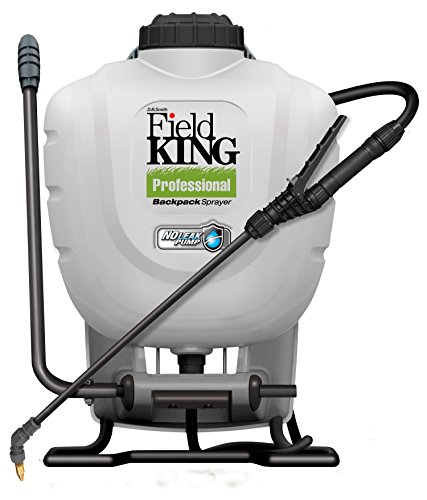 Field King backpack sprayerThe standard 4-gallon application tool
 3M 6300 half facepieceRespiratory protection, when the label calls for it
 Heavy-duty nitrile glovesChemical-resistant hand protection
PPE requirements come from each product label, which is the controlling legal document. These are common categories, not use guidance. The full kit page.