Guide
What makes a pesticide restricted use
What the restricted use classification means, why some pesticides carry it, how the label functions as the legal instrument, and how a farm or business should think about certification.
Walk into a farm supply store and you can buy a wide range of pesticides with nothing more than a wallet. But some products are different. They sit behind a counter, or in a separate part of the warehouse, and the dealer will ask for a certification credential before selling them. These are restricted use pesticides, usually shortened to RUPs, and the line between them and everything else is one of the most important concepts in the entire pesticide regulatory system. If you are studying for an applicator exam, deciding whether certification is worth pursuing for your farm, or building a business plan around application services, understanding what restricted use actually means is the place to start.
This article explains the restricted use concept from the ground up: why the classification exists, what it means in day-to-day operations, why the product label is the legal instrument that makes the whole system work, and how to think about the certification decision if you run a farm or a business that might need access to these products. Everything here reflects the federal framework; your state lead agency administers the details where you live and may apply stricter requirements.
Two classes of pesticide
Federal pesticide law sorts registered pesticide products into two classes: general use and restricted use. A general use product is one that can be used by anyone, provided they follow the label. The bulk of what sits on retail shelves, from household insect sprays to common lawn products, falls in this class. The judgment behind general use classification is that the product, used according to its label, does not present unreasonable risk in the hands of an ordinary person willing to read and follow directions.
A restricted use product is one where that judgment goes the other way. When a product is classified for restricted use, the government has concluded that even when the label is followed, the product may cause unreasonable adverse effects on people or the environment unless the person using it has additional competency: training and demonstrated knowledge beyond what an ordinary purchaser can be assumed to have. The response is not to ban the product. It is to restrict who may use it. Restricted use products may only be applied by certified applicators or by people working under the direct supervision of certified applicators. The product stays available, but the pool of lawful users narrows to those who have proven they know how to handle it.
Why some products are restricted
It helps to think about what kind of risk drives the classification. Some products are restricted because of acute hazard to the person applying them or to bystanders: materials that are dangerous enough in concentrated form that safe handling depends on real training in protective equipment, exposure routes, and emergency response. Others are restricted because of environmental hazard: a tendency to move off target, to persist where they are not wanted, to reach groundwater under certain conditions, or to harm birds, fish, pollinators, or other non-target organisms if applied without the judgment that training builds. Still others are restricted because the use pattern itself is unforgiving, as with fumigants that act as gases and cannot be recalled once released.
Notice what these threads have in common: in every case, the extra risk can be managed, but managing it depends on the applicator knowing things. Knowing how weather conditions change drift risk. Knowing what a sensitive site is and how to recognize one across the fence. Knowing what protective equipment the label requires and how to use it correctly. Knowing what to do in the first minutes after an exposure or a spill. The restricted use classification is, at bottom, a statement that this knowledge is not optional for this product. Certification is how the system verifies the knowledge exists before the product changes hands.
It is worth being clear about what restriction is not. It is not a statement that the product is bad, or that using it is irresponsible. Restricted use products are legal, registered tools that fill real needs in agriculture, public health, and industry. Many of the most effective options for certain pest problems carry the classification. The classification simply attaches a competency requirement to the tool, the same way other fields attach licenses to activities where untrained mistakes are costly. The system is built on the idea that trained people can use these products responsibly, and it exists to make sure the people using them are, in fact, trained.
The label is the legal instrument
Every part of this system runs through the product label, and this is where the phrase every applicator learns comes in: the label is the law. A pesticide label is not marketing copy or a suggestion sheet. It is a legal document, reviewed and approved as part of the product's registration, and using a pesticide in a manner inconsistent with its labeling is a violation of federal law. The label tells you where the product may be used, how, under what conditions, with what protective measures, and with what restrictions on the treated site afterward. When people talk about lawful pesticide use, they are talking about use that stays inside the four corners of the label.
For restricted use products, the label is also where the classification lives. A restricted use product announces itself in a statement at the top of its label, identifying the product as restricted and stating that it is for retail sale to and use only by certified applicators or persons under their direct supervision. That statement is the legal trigger. It is what obligates the dealer to verify credentials, and it is what makes an uncertified purchase or application unlawful. There is no separate lookup you must perform to know a product's status; the product declares it on its own packaging.
This is why label comprehension sits at the center of every applicator exam. The competency the certification system verifies is, more than anything else, the ability to read a label and extract everything it demands of you: the classification statement, the signal word that communicates the hazard tier, the protective equipment requirements, the environmental hazard statements, the sites and pests the product covers, and the restrictions that follow an application. An applicator who reads labels well is equipped to handle products responsibly, and one who does not is a risk regardless of experience. The label is where the law, the science, and the practical instructions converge on a single document in your hands.
The label governs
No article, manual, or advice, including this one, overrides the label on the product in front of you. If anything you read anywhere conflicts with the label, the label wins. This is the single most important operating principle in pesticide work.
What restriction means operationally
So what actually changes, day to day, when a product carries the restricted use classification? The practical effects show up at three points: purchase, application, and recordkeeping. At purchase, dealers may only sell restricted use products to certified applicators or people authorized to buy on their behalf, which means the credential comes out before the product does. At application, the person applying the product must either be a certified applicator or be working under the direct supervision of one. And around the whole transaction, requirements attach for documenting who bought what and who applied it, with the details administered by your state.
The supervision provision deserves attention because it is how real crews function. The law does not require every person who ever handles a restricted use product to be individually certified. Noncertified applicators may use restricted use products under the direct supervision of a certified applicator, and the federal rules define what that supervision must include: the certified applicator takes responsibility for the application, must ensure the noncertified person has received required training, and must be available in the manner the rules and the product label require. Some product labels tighten this further and demand the physical presence of the certified applicator during the application. Supervision is a genuine responsibility, not a paperwork formality: the certified applicator answers for the supervised work.
For a business, these operational facts translate into staffing decisions. A crew needs at least one certified applicator to anchor any restricted use work, and the supervision rules determine how far that one certification stretches. A farm needs a certified private applicator in the operation before restricted use products can be part of the pest management program. Either way, the certification is not just a wall certificate; it is the legal foundation under a set of day-to-day activities, and losing it, through lapse or violation, takes those activities off the table until it is restored.
- Purchase: dealers verify certification before selling restricted use products.
- Application: only certified applicators, or noncertified applicators under their direct supervision, may apply them.
- Supervision: the certified applicator is responsible for supervised applications and must meet the availability and training requirements the rules and label impose.
- Continuity: certification must be kept current for any of this to remain lawful.
Private and commercial paths to access
There are two certification paths to restricted use access, and which one fits you depends on whose land you treat and whether application is a service you sell. A private applicator certification covers people using or supervising the use of restricted use pesticides to produce an agricultural commodity on their own land, on land they rent or lease, or on an employer's land as part of producing that commodity. This is the farmer and rancher path: the certification exists so that agricultural producers can use restricted tools in their own operations.
A commercial applicator certification covers essentially everyone else who uses or supervises the use of restricted use products, most visibly people applying pesticides for hire on other people's property, and it is organized into categories that match different kinds of work. Both paths carry a minimum age of eighteen for certification, and both verify competency, though the mechanisms differ: commercial applicators demonstrate competency through written examination under the federal standard, with certifying authorities able to add performance testing, while states have some flexibility in how they verify private applicator competency. If you farm and also spray for neighbors as a paid service, the paid work pushes you toward the commercial credential; the private certification covers production on your own operation, not application as a business.
Is certification worth it for a farm or business
For a farm, the question is whether restricted use products belong in your pest management toolbox. Some operations get along fine with general use products, cultural practices, and hired custom applicators, and for them certification may be unnecessary. But relying on custom application for every restricted use need means someone else's schedule controls your timing, and timing is often the difference between a treatment that works and one that does not. A private applicator certification puts that control back in your hands: you decide when conditions are right, you act on your own equipment, and the full range of registered tools is available when a pest problem demands it. Weigh the study time and the recertification obligation against what timely access is worth across the pest pressures your operation actually faces.
For a business, the calculus is different because certification is not just access, it is inventory. Every service that involves restricted use products is a service an uncertified competitor cannot legally sell. The certification requirement functions as a barrier to entry around a portion of the market, and businesses on the credentialed side of that barrier face a smaller field of competitors for that work. Beyond the legal access, the credential signals competence to customers who are increasingly aware that pesticide work done badly creates liability for the property owner as well as the applicator.
There is also a defensive argument that applies to both farms and businesses: the study process itself has value. Preparing for certification forces a systematic pass through pest identification, label comprehension, protective equipment, drift, storage, spills, and the legal framework, and that knowledge improves the safety and effectiveness of everything you do with any pesticide, general use products included. People who go through certification generally come out the other side handling all of their pest management work differently. The credential is the visible product, but the competency is the real asset.
Keeping the credential current
Certification is not permanent. Under the federal standard, a certification expires five years after it is issued, and certifying authorities may set shorter periods. Renewal runs through recertification, which the system allows by either of two routes: passing the examination again, or completing an approved program of continuing education. Most working applicators take the continuing education route, accumulating approved training over the certification period, because it spreads the effort out and keeps knowledge current as products and rules change. Whichever route you take, the practical rule is the same: track your expiration date and your continuing education standing, because a lapsed certification means no restricted use purchases and no lawful restricted use applications until it is restored.
The restricted use system, seen whole, is a competency bargain. Powerful tools remain available, and in exchange, the people using them prove they know what they are doing and keep proving it on a cycle. If restricted use products have a place in your operation or your business plan, certification is the price of admission, and for most people who need the tools, it is a price worth paying.
Ready to test your knowledge of the certification framework
The certification map
One printable page: private vs commercial, every federal category, and the five-year clock with the exam-or-CE choice. Free.
No spam. One useful sheet and occasional notes.
The working kit (the label decides what you actually need)
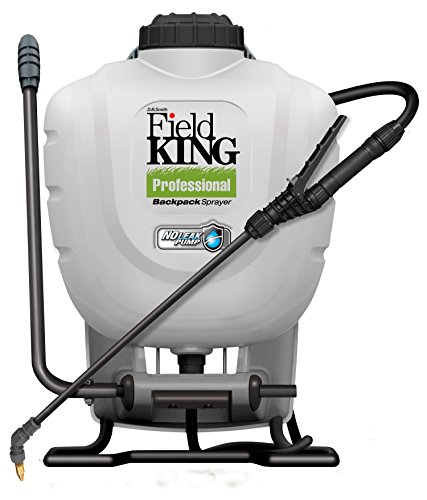 Field King backpack sprayerThe standard 4-gallon application tool
 3M 6300 half facepieceRespiratory protection, when the label calls for it
 Heavy-duty nitrile glovesChemical-resistant hand protection
PPE requirements come from each product label, which is the controlling legal document. These are common categories, not use guidance. The full kit page.