Guide
Should you become a certified pesticide applicator?
An honest decision guide to pesticide applicator certification: what the work and the responsibility really involve, how the certification structure works, the genuine drawbacks of the career, and how to tell if it fits you.
Pesticide applicator certification sits at an unusual crossroads. For some people it is a career in itself: lawn care, structural pest control, agricultural spraying, right-of-way vegetation management. For others it is a credential bolted onto a career they already have: the farmer who needs to apply restricted products on their own land, the landscaper adding weed control, the grounds manager whose facility expects it. Both groups end up studying the same material and carrying the same legal responsibility, and both deserve a more honest answer than the training industry usually offers to the question of whether this path is worth taking.
This guide gives that answer the space it needs. It covers what applicator work actually involves beyond the spraying itself, how the certification structure works at the federal level, the legitimate case for earning the credential, the drawbacks that deserve real weight, and a self-assessment drawn from the traits that separate careful, durable applicators from the people who wash out or, worse, cut corners.
What the work actually is
Strip away the job titles and applicator work is applied chemistry outdoors, wrapped in law. The visible part is treatment: spraying a lawn, injecting a termite barrier, spreading granules on a field, fogging a storage facility, clearing brush from a utility corridor. The invisible parts are where the profession actually lives: identifying the pest correctly, choosing a product whose label covers that pest at that site, calculating rates and mixing accurately, checking weather to manage drift, wearing and maintaining the required protective equipment, keeping people and animals out of treated areas for the required intervals, and recording all of it.
The organizing fact of the entire profession is the label. Every pesticide product carries a label that is legally binding, and the phrase drilled into every applicator, that the label is the law, is meant literally. The label dictates which sites and pests the product may be used on, the allowable rates, the required protective equipment, the re-entry intervals, and the storage and disposal rules. Following it is not best practice, it is the legal floor, and violating it exposes the applicator personally, not just the employer. Certified applicators are, in a real sense, licensed to make legally binding judgments with regulated chemicals, and the job selects hard for people who take that framing seriously.
Day to day, the work is more physical and more solitary than outsiders expect. You are outdoors in the weather that the season provides, carrying tanks and hoses or operating rigs, walking properties, and driving between them. On the structural side you add crawlspaces and attics. Much of the time you work alone or in small crews, managing your own route and your own decisions. For many applicators that independence is the best part of the job. For the careless, it is exactly the condition under which corners get cut, which is why the profession leans so heavily on certification and records.
How certification works
The federal structure is straightforward. Certification is required to use or supervise the use of restricted use pesticides, the products judged too hazardous for general availability. General-use products can be applied without certification in many contexts, but the restricted products that anchor serious agricultural and pest control work require the credential, and many states extend certification requirements further for anyone applying commercially.
Certification splits into two types. Private applicator certification covers people producing an agricultural commodity on their own or their employer's land, the classic case being a farmer treating their own fields. Commercial applicator certification covers essentially everyone else, meaning people applying as a service or on property that is not theirs. Commercial certification is organized into categories by work type, with sixteen federal categories spanning areas like agricultural plant and animal work, ornamental and turf, structural pest control, right-of-way, aquatic, and public health applications. You certify in the categories matching your work, and each category has its own exam content on top of the core material.
The mechanics you can expect: a minimum age of eighteen, a written exam covering the core competencies of safe pesticide use plus your category material, and for private applicators a state-determined competency process that commonly still means a written test. Federally, certification expires after five years, with renewal through either re-examination or continuing education, and states run the actual programs, setting their own exam details, fees, categories beyond the federal floor, and recertification credit systems. The practical takeaway for a decision: entry is accessible, study for the exams is measured in weeks of honest preparation rather than years, and the ongoing obligation is a renewal cycle that keeps you current for as long as you practice.
What the core exam material actually covers, in plain terms:
- Label comprehension: reading and correctly applying every section of a pesticide label, since the label is the legal instrument
- Pest identification and integrated pest management, because treating the wrong pest is both malpractice and wasted chemical
- Formulations, mixing, and application math, including rates, dilutions, and calibration of equipment
- Personal protective equipment and exposure routes, and what to do when exposure or a spill happens
- Environmental protection: drift, runoff, groundwater, pollinators, and sensitive sites
- Storage, transport, disposal, and the recordkeeping obligations that follow every application
The case for certification
The demand argument rests on a simple base: pests do not stop. Agriculture needs crop protection every season, termites and rodents do not respect economic cycles, utilities must keep vegetation off their lines, and municipalities must manage mosquitoes and invasive plants. The work is local by nature, cannot be offshored, and regenerates continuously, because treatment is rarely permanent. Pest control operates as a recurring service in most of its markets, with customers on quarterly or seasonal schedules, which gives established applicators and the companies they work for an unusually durable base of repeat work.
The credential itself is also a genuine differentiator. Because certification is a legal requirement for restricted products and for most commercial application, holding it separates you from every uncertified laborer in the green industry. For a landscaper, it unlocks service lines that competitors cannot legally offer. For a farm operation, it removes dependence on outside custom applicators for restricted products. For someone entering pest control, it is the gateway to running your own route and eventually supervising others. The exam is passable with honest study, the age requirement is minimal, and no multi-year apprenticeship stands between you and the credential, which makes this one of the most accessible licenses in the working world relative to what it unlocks.
Other advantages worth counting:
- Independence: most applicator roles mean managing your own route, your own decisions, and your own day with light supervision
- The knowledge is real and compounding: entomology, botany, chemistry, and equipment skills that deepen for an entire career
- Multiple industries hire the same credential, so you can move among lawn care, structural, agricultural, and right-of-way work
- The path scales from employee to supervisor to business owner, since certified applicators are the legal backbone of any application business
- For farmers and land managers, certification pays for itself in capability even if application is never your primary job
The case against, taken seriously
The drawbacks of this career are not small, and the honest ones in the profession will tell you so. Weigh each of these before you study for anything.
First and most important: you will spend a career managing chemical exposure. Modern products, used exactly as labeled with proper protective equipment, are designed to be handled safely, and the entire certification system exists to make that the norm. But the discipline is on you, every single day, for decades. Mixing and loading are the highest-exposure moments and they happen constantly. Protective equipment is hot, awkward, and tempting to shortcut in summer, which is precisely when application seasons peak. The applicators who stay healthy are the ones who treat exposure protocols as non-negotiable when nobody is watching and it is sweltering and the shortcut would save ten minutes. If you already know you are a corner-cutter under discomfort, believe that about yourself, and understand that this career punishes that trait more than most.
Second, seasonality shapes both the workload and the year. Growing seasons drive agricultural and turf work, pest pressure follows weather, and in cold climates parts of the industry slow dramatically in winter. The busy season means long days, early starts to beat wind and heat, and weekend work when weather windows compress the schedule. The slow season means reduced hours in some roles and layoffs in others, though structural pest control and interior work run closer to year-round. Anyone entering should map the seasonal shape of their specific niche and climate honestly rather than assuming an even year.
Third, the recordkeeping burden is permanent and legally loaded. Applications of restricted products must be documented, states and employers layer their own requirements on top, and the records are not busywork: they are what protects you when a neighbor alleges drift damage, a customer claims harm, or an inspector audits your operation. Every application generates paperwork, and the paperwork must be right, because it is evidence. People who resent documentation should hear clearly that this profession runs on it.
Fourth, the label-compliance responsibility follows every single application you make or supervise. A drift incident that damages a neighboring crop, a misapplication near a sensitive site, or harm to pollinators can mean investigations, fines, license actions, and civil liability, and the certified applicator is the accountable party. Supervision cuts the same way: when your certification covers the work of others, their mistakes reach your license. This weight is exactly why the credential has value, but it is weight, and some people carry it comfortably while others feel it every night.
Your state runs the program
States administer certification, set exam details and fees, define additional categories, and run their own renewal systems. Requirements differ meaningfully between states, so before planning anything, read your own state program materials and confirm which certification type and categories your intended work actually requires.
Who thrives, who hates it
The profession sorts people quickly, and the sorting follows temperament more than background. Read both lists against yourself honestly.
You are likely to thrive as a certified applicator if most of these describe you:
- You follow procedures exactly even when nobody is watching, and shortcuts under discomfort are not in your nature
- You like working outdoors and alone, managing your own route and being trusted with your own decisions
- Reading technical material carefully, labels above all, feels natural rather than burdensome
- You are physically comfortable with heat, weather, protective gear, and a genuinely active workday
- Recordkeeping feels to you like professional self-protection rather than bureaucratic insult
- You find the underlying science, from insect life cycles to herbicide chemistry, genuinely interesting
- You accept personal legal responsibility calmly and would rather hold the license than hide behind someone else who does
You are likely to hate it if several of these ring true:
- You are casual about safety rules and assume things will be fine, an attitude this career punishes over time
- Any level of managed chemical exposure is a dealbreaker for you regardless of protocols and equipment
- Documentation is the part of every job you skip, defer, or resent
- You need an even, predictable workload across the year and cannot absorb a compressed busy season
- Working in protective equipment through summer heat sounds unbearable rather than merely unpleasant
- The idea that a neighbor complaint or drift claim could reach your personal license would keep you up at night
How to actually decide
Three questions do most of the work. First, the discipline question, which is the decisive one: are you the person who follows the protocol on the ninetieth application of a hot week exactly as written, with the same gear and the same care as the first? Every other strength in this profession is built on that foundation, and its absence is disqualifying no matter how good the opportunity looks. Second, the responsibility question: does carrying personal legal accountability for every application read to you as professional standing or as unbearable exposure? Both reactions are common, and only one belongs in this career. Third, the fit question: does the actual niche you would enter, with its specific seasonality, physical demands, and paperwork, match the life you want, based on its real annual shape rather than its best months?
If the answers point toward yes, the entry economics are among the friendliest in licensed work: accessible exams, modest prerequisites, a five-year federal renewal rhythm, and a credential that immediately separates you from uncertified competition in multiple industries. If the answers are mixed, run the cheap experiment first: ride along for a season, or even a week, with a working applicator or a pest control route, which many companies will arrange for a serious hire. Watching the mixing, the gear, the pace, and the paperwork up close will tell you whether the discipline this work demands is discipline you would enjoy exercising.
| Question | Points toward yes | Points toward no |
|---|---|---|
| Protocol discipline | Follows procedure exactly, unsupervised, in discomfort | Cuts corners when hot, tired, or unobserved |
| Responsibility | Personal legal accountability reads as professional standing | License exposure and complaint risk would cause constant dread |
| Physical fit | Handles weather, protective gear, and active days well | Heat plus equipment sounds unbearable, not just unpleasant |
| Paperwork | Treats records as evidence and self-protection | Resents documentation and defers it habitually |
| Seasonal shape | Can absorb long busy seasons and slower stretches | Needs a flat, predictable workload year-round |
The honest summary: applicator certification hands you real independence, recurring demand, and a legally protected role, and it charges for those things in daily discipline, seasonal intensity, paperwork, and the permanent weight of the label. People built for that trade find it one of the most underrated paths in outdoor work. People who are not built for it should respect that mismatch, because this is a profession where cutting corners harms more than a career. If the discipline is in you, the next step is concrete and short: learn your certification path, pick your categories, and start preparing for the exam.
Ready to move forward? See the full step-by-step licensing path
The certification map, free
Private vs commercial, every federal category, and the five-year clock on one printable page. Enter your email and we will send you straight to it.
No spam. One useful sheet and occasional notes.
Read next
- Pest control salary: what applicators earn
- Structural pest control certification: the path in
- How to get a pesticide applicator license
The companion book
The working kit (the label decides what you actually need)
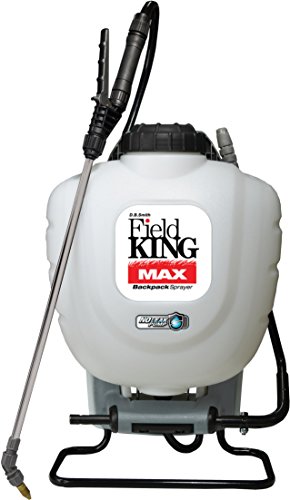 Field King Max backpack sprayerThe standard 4-gallon application tool
 3M 6300 half facepieceRespiratory protection, when the label calls for it
 Heavy-duty nitrile glovesChemical-resistant hand protection
PPE requirements come from each product label, which is the controlling legal document. These are common categories, not use guidance. The full kit page.