Guide
Structural pest control: the industrial, institutional and structural path
The commercial category behind pest control operators: what industrial, institutional and structural work covers, why fumigation is its own deep end, employment versus owning a route, and how supervision works inside pest control companies.
Ask someone to picture a pest control professional and they will picture this category. The technician treating a home for ants, the operator working a restaurant account before opening hours, the crew protecting a warehouse, a school, a hospital, a food plant: in the federal certification system, that entire world lives inside one commercial category, named industrial, institutional, and structural pest control. It is the category behind the pest control operator's credential in the sense that matters, the one whose competency standards are built around structures and the pests that infest them, and it is the natural first destination for anyone entering the trade or building a company in it.
This guide walks the path from the federal framework's point of view. What the category covers and why it is defined the way it is. Where the certification requirement actually triggers, and where it does not. Why fumigation sits apart from the rest of structural work in two categories of its own, and what that separation means for a career or a company. How the road differs depending on whether you are taking a job with an established operator or building a route you own. And how supervision structures actually work inside pest control companies, where the distance between the certificate on the wall and the technician at the door is a question every well-run firm has to answer deliberately. As always, the federal standards at 40 CFR Part 171 set the floor, and your state lead agency, operating its EPA-approved plan, runs the program you will actually certify through and remains the final word on logistics and anything the state adds.
What the category covers
The federal commercial system divides application work into categories, sixteen of them at the federal level, each with its own competency standards, so that an applicator is examined on the work they actually do. Industrial, institutional, and structural is the category for pest work in, on, and around structures and the institutional settings people occupy. Homes and apartment buildings. Offices, restaurants, and retail. Schools, hospitals, and care facilities. Warehouses, food handling and processing establishments, and industrial sites. The common thread is the setting: enclosed and occupied spaces, the pests that exploit them, and the particular care that treating around people, food, and property demands. That is a genuinely different body of knowledge than treating a field, a lawn, or a right-of-way, which is exactly why the framework fences it off as its own category with its own exam.
The competency the category tests reflects that setting. Where an agricultural exam thinks in fields and crops, the structural exam thinks in harborage and entry points, in the biology of the pests that live alongside people, in treatments that must be effective in a kitchen or a pediatric ward without endangering the occupants, and in the inspection and exclusion work that separates professional pest management from spraying baseboards. The label remains the first and final authority on every application, and structural labels are demanding reading precisely because the settings are sensitive. A technician who can read an unfamiliar label and correctly extract where the product may be used, how, and under what restrictions has the core structural skill; the category exam is substantially a test of exactly that discipline applied to the structural world.
Where does the certification requirement actually trigger? The federal rule is the same here as everywhere: restricted use pesticides. Using a restricted use product, or supervising its use, requires a certified applicator, and structural work for hire is commercial by definition, since it is neither producing an agricultural commodity nor happening on the applicator's own or employer's land for that purpose. So the federal floor is: restricted use product in structural work means commercial certification in this category. Two practical notes belong next to that rule. First, a good deal of day-to-day structural work uses general use products, which do not fire the federal trigger on their own. Second, states regulate the structural trade through their own programs layered on the federal floor, and what a state requires of pest control businesses and technicians can reach beyond the federal minimum. Anyone entering the trade should treat the federal framework as the foundation and their state lead agency as the authority on the full local picture, because building a career plan on the federal floor alone is how people end up surprised.
Fumigation: the separate deep end
Inside the structural world there is a discipline the federal framework deliberately refuses to bundle with the rest: fumigation. The category list includes two fumigation categories, soil fumigation and non-soil fumigation, standing apart from the industrial, institutional, and structural category. For the structural trade, the non-soil fumigation category is the relevant deep end, covering the fumigation work that structural operators encounter: whole structures under tarps, commodities, containers, chambers, and the other enclosed-space fumigations that the industry performs. Soil fumigation, its sibling category, covers fumigant applications to soil and belongs mostly to the agricultural world, but the two share the logic of their separation: fumigants are a different kind of tool, and the framework treats competency with them as its own qualification.
The reason for the separation is worth internalizing rather than memorizing. General structural work applies products to targeted places; fumigation fills a sealed space with a penetrating gas. Everything difficult about the discipline follows from that: the sealing and aeration of the space, the monitoring, the planning that keeps every person out of the treated volume until it is safe, the coordination that a structural fumigation demands. It is work where the margin for casualness is effectively zero, and the federal category system responds by making it a distinct competency with its own standards rather than an advanced chapter in the general structural exam. A structural credential does not make you a fumigator. A fumigation credential is earned separately, on separate material.
For a person planning a career, that separation is useful information, because it marks a specialization with a real barrier to entry. Fumigation work concentrates in fewer hands than general pest control precisely because the additional category, and the seriousness it represents, filters the field. A technician who adds the non-soil fumigation category to a structural credential becomes more valuable to any company that performs or subcontracts fumigation work, and a company that builds genuine fumigation capacity can serve accounts, food facilities, commodity storage, port and container work, structural jobs, that general pest control firms must refer away. For a company owner, the same logic runs in reverse: do not let ambition drift the firm into fumigation work ahead of the credentials and the competence. The category line is the warning label on the deep end, and it is there because the water really is deeper.
The label is the law, and fumigant labels doubly so
No certification, in any category, authorizes an application that conflicts with the label. Fumigant labels are among the most demanding in the trade, and the fumigation categories exist because following them competently is a discipline of its own. Treat the category boundary the way the framework does: as a line you cross with training and examination, never with improvisation.
Employment versus owning a route
There are two ways into the structural trade, and the certification path looks different depending on which door you use. The first door is employment: joining an established pest control company as a technician. The second is ownership: building or buying a route and operating it as your own business. Both roads run through the same category, but they load the certification question differently, and it is worth walking each one honestly.
The employment road is the gentler on-ramp, and the federal framework is built to accommodate it. A new technician can begin working before holding any certification, as a noncertified applicator under the direct supervision of a certified applicator, subject to the supervision requirements. That is how the industry actually trains: the new hire rides along, learns the accounts, learns the inspection craft, and works under a certified supervisor while studying toward a credential of their own. The employer carries the regulatory weight in this phase, because the certified applicator is responsible for the supervised work. The new technician's job, beyond the route itself, is to treat the supervised period as a bridge with a far end: get the manuals early, study steadily, be at least 18, and sit the written exam for the category as soon as the state program and genuine readiness allow. A technician with their own credential stops borrowing someone else's qualification and starts building a professional identity that is portable across employers.
The ownership road has no gentle on-ramp, because ownership collapses the roles. An owner-operator who applies restricted use products needs the certification to do the work. An owner who hires technicians and expects them to work under supervision needs a certified applicator for them to work under, and in a young company that certified applicator is almost always the owner. And an owner deciding what services the company sells needs the categories to match the menu: the structural category for the core trade, the non-soil fumigation category if fumigation is ever on the ticket, and any other category the service list touches. The blunt sequencing advice for anyone planning to hang out a shingle is: credential first, company second. A route with customers and no certified applicator is a business that cannot lawfully deliver its restricted-use work, and certifications are earned on study calendars and exam schedules, not purchase orders. Add the state layer on top, since states commonly regulate structural pest control businesses as businesses, and the ownership road clearly rewards the founder who talks to the state lead agency before printing anything.
There is also a middle road worth naming: the career technician who becomes the credential backbone of someone else's company. In many firms, the most certified person in the building is not the owner but a senior technician or service manager who holds the categories, supervises the newer staff, and effectively anchors the company's lawful capacity. That position is leverage. It is earned with exams and years, it is visible to every competitor who might hire, and it is one of the strongest arguments a technician has at review time. In a credentialed trade, the credential ledger is a career ledger, and the technicians who understand that early tend to run the companies later, one way or another.
How supervision actually works in a pest control company
Because the trade trains through supervision, the structure of supervision inside a company is not a legal footnote; it is the operating system. The framework's provision is simple to state: noncertified applicators may use restricted use pesticides under the direct supervision of a certified applicator, subject to the supervision requirements, and the certified applicator is responsible for the applications performed under that supervision. Everything interesting is in how a company makes that real across a fleet of trucks and a book of accounts, day after day, without the supervision thinning into fiction.
The failure mode every serious firm guards against is the wall certificate: one credential in the office, many technicians in the field, and a connection between them that exists mostly on paper. That structure concentrates the entire company's lawful capacity, and its entire regulatory exposure, in one person, and it degrades naturally, because routes grow faster than anyone re-examines the ratio of certified supervisors to supervised technicians. The requirements attached to direct supervision exist to keep the arrangement honest, and product labels can impose their own conditions on top; a company whose supervision would embarrass it if described aloud to an inspector has its answer already. The healthy structure treats supervised status as a stage every technician passes through, not a caste half the company lives in permanently.
- Know, at any moment, which technicians are certified, in which categories, and which are working under whose supervision
- Keep the supervisor-to-supervised links explicit and current, not implied by an org chart nobody updates
- Fund the path: manuals, study time, and exam fees for every technician expected to reach certification
- Set certification expectations at hiring, with the supervised period framed as a bridge with a schedule
- Track every credential's expiration centrally, and feed continuing education requirements across the year rather than at the deadline
- Match categories to the service menu before selling new work, with fumigation treated as its own gated decision
The renewal system is part of the same operating discipline. Certifications expire five years after issuance under the federal standard, and certifying authorities may set shorter periods; renewal runs through reexamination or an approved continuing education program under the authority's plan. A pest control company lives on its credentials the way it lives on its vehicles, and it should maintain them the same way: on a schedule, centrally tracked, with the continuing education route fed steadily through the year at approved training rather than crammed against expirations. A lapsed credential in a supervision-based company is not one person's problem; it can un-anchor every supervised technician attached to it, which is why the tracking belongs to the company calendar and not to individual memory.
The path, laid end to end
For an individual entering the trade, the sequence is concrete. Confirm you are at least 18, the federal minimum age for certification. Find your state lead agency and read its program pages for the commercial track and the industrial, institutional, and structural category, noting whatever the state layers on top of the federal floor. Get the current study materials, the commercial core manual and the structural category manual, through the extension service or wherever the agency directs, since extension manuals are the study spine in most states. If you are already employed, work your supervised period deliberately while you study. Then sit the written examinations, core and category, and carry your own credential onto the route. From there, the additions are strategic: the non-soil fumigation category if your work or ambition points at the deep end, other categories as your company's menu grows, and a continuing education habit that keeps the renewal cycle boring.
| Situation | Category question | Certification reality |
|---|---|---|
| General pest work in homes, businesses, and institutions | Industrial, institutional, and structural | The core credential of the trade; written core and category exams through the state program |
| Fumigating structures, commodities, or other enclosed spaces | Non-soil fumigation | A separate category with its own standards; never an extension of the general structural credential |
| Fumigant applications to soil | Soil fumigation | The agricultural sibling category; same logic, different setting |
| New technician at an established firm | None yet required to start | Work under direct supervision of a certified applicator while studying toward your own credential |
| Owner-operator launching a route | Structural, plus any category the menu touches | Credential first, company second; someone certified must anchor every supervised technician |
Step back and the structural path is the commercial framework working as designed. The category exists because pest work around people and buildings is its own competency. Fumigation stands apart because it is a different discipline again, with the two fumigation categories marking the deep end honestly. Supervision lets companies train the next generation inside real work, provided the supervision stays real. And the credential itself, written exam, five-year clock, renewal by retesting or continuing education, is the portable professional spine that a technician carries from employer to employer and an owner builds a company on. The trade rewards people who take the framework seriously, because every part of it maps to something that actually goes wrong when it is ignored.
Whether you are studying for a first structural exam or planning the company that will need three of them, the certification process itself, from finding your state program to passing the written exam, is covered in full in the guide below.
Get the complete certification roadmap, from first manual to passing score
The certification map
One printable page: private vs commercial, every federal category, and the five-year clock with the exam-or-CE choice. Free.
No spam. One useful sheet and occasional notes.
The working kit (the label decides what you actually need)
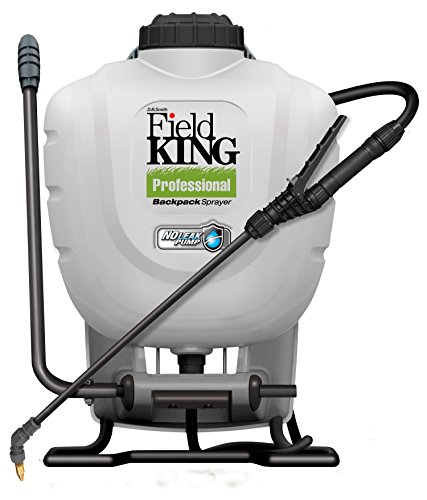 Field King backpack sprayerThe standard 4-gallon application tool
 3M 6300 half facepieceRespiratory protection, when the label calls for it
 Heavy-duty nitrile glovesChemical-resistant hand protection
PPE requirements come from each product label, which is the controlling legal document. These are common categories, not use guidance. The full kit page.