Guide
What pest control and applicator work actually pays
An honest pay guide for pest control and applicator careers: the verified Bureau of Labor Statistics numbers and their limits, the levers that move real pay above the median, the agricultural side framed honestly, and the costs the paycheck has to cover.
Most writing about pest control pay is either recruitment copy or guesswork. Recruiters round up, forums trade unverifiable claims, and salary aggregation sites blend job postings with self reports until the resulting number means almost nothing. This article takes a different approach: it uses the one set of figures that is actually measured, published, and attributable, explains exactly what those figures cover and what they leave out, and then deals honestly with the things that move real pay up or down, most of which no national statistic captures at all.
The plan is simple. First, the verified numbers and their limits. Then the levers that separate applicators earning near the median from the ones earning well above it: route ownership, commercial accounts, category stacking, supervision, and eventually running an operation instead of working inside one. Then the agricultural side, which the headline statistics do not cover and which deserves its own honest framing. And finally the costs, because a wage only means something once you know what it has to pay for.
The verified numbers, and exactly what they cover
According to the Bureau of Labor Statistics Occupational Outlook Handbook, using 2025 data, pest control workers earn median pay of $45,250 per year, which works out to $21.75 per hour. The same source counts 108,700 jobs in the occupation, lists the typical entry-level education as a high school diploma or equivalent, and describes the standard preparation as moderate-term on-the-job training. In plain language: this is a field you can enter without a degree, where the employer teaches you the trade on the clock, and where the licensing exam, not a classroom credential, is the professional gate.
One honest caveat before those numbers get used for anything. The Bureau of Labor Statistics category behind them covers structural pest control workers, the people treating homes, restaurants, warehouses, and other buildings for insects, rodents, termites, and similar pests. Agricultural applicators and the other applicator specialties are tracked separately, so treat every figure in this article as the structural side's numbers, not as a description of the whole certified-applicator world. The agricultural side gets its own section later in this article, handled qualitatively, because that is the only honest way to handle it here.
A median also deserves a moment of respect, because it is routinely misread. Median means that half the workers in the occupation earned more than $45,250 and half earned less, per the Bureau of Labor Statistics 2025 data. It is not a starting wage, and it is not a ceiling. New technicians in training generally start below it, while experienced applicators with established routes, in-demand category licenses, or supervisory duties sit above it. The interesting career question is never the median itself. It is how a person moves from one side of it to the other, and that movement is what the middle of this article is about.
What the outlook figure actually says
The Bureau of Labor Statistics projects employment of pest control workers to grow 6 percent from 2025 to 2035, a rate it classifies as faster than average, amounting to roughly 6,000 additional jobs over the decade. Growth projections are the softest kind of labor statistic and should be held loosely, but the direction matters more than the decimal. The occupation is expanding rather than contracting, and the reasons are structural rather than cyclical.
Pest pressure does not respond to interest rates. Termites keep eating, rodents keep breeding, bed bugs keep traveling, and health codes keep requiring commercial kitchens and food warehouses to stay under service regardless of what the economy is doing. The work is local by nature and cannot be offshored or fully automated, because someone still has to inspect the crawlspace, identify the pest correctly, and make a legally accountable treatment decision on site. Add the recurring-service structure of the industry, where most accounts sit on quarterly, bimonthly, or monthly schedules rather than one-time calls, and you get an occupation whose demand base regenerates continuously. That durability is worth more to a career than the growth percentage suggests, because it shapes what a bad year looks like: slower, not gone.
The levers that move pay above the median
The first lever is route ownership. In most structural pest control companies, a technician graduates from training into a route of their own: a defined set of recurring accounts they service, retain, and grow. Pay structures vary by company, but route-based compensation commonly blends a base wage with production pay tied to the revenue the route generates, plus commissions on services the technician adds to existing accounts. That structure is why two technicians at the same company holding the same license can earn very different amounts. A dense, well-retained route in a strong territory produces more, and the technician who keeps cancellations low, upsells honestly, and runs the day efficiently captures part of that difference. Route ownership converts diligence into money more directly than most hourly trades ever manage to.
The second lever is commercial work. Residential accounts are the industry's bread, but commercial accounts, meaning restaurants, food processing facilities, warehouses, healthcare facilities, and multi-unit housing, are its butter. Commercial service demands more: tighter documentation, audit-ready logbooks, scheduled inspections, and technicians who can walk a facility with a manager and speak to compliance rather than just to treatment. Because fewer technicians do that well, and because commercial contracts are larger and stickier than residential ones, the technicians trusted with commercial routes generally sit higher in the pay structure. The same discipline the certification exams test for, careful reading, exact documentation, procedural consistency, is exactly what commercial work pays a premium for.
The third lever is category stacking. Certification is organized into categories by work type, and every additional category a technician holds is a service line their employer can legally sell through them. The classic high-value additions on the structural side are termite work and fumigation. Termite jobs involve soil treatment, baiting systems, and pre-construction work that commands far larger tickets than general pest service, and fumigation is a specialized, tightly regulated skill that relatively few technicians hold. An applicator who can legally run general pest, termite, and fumigation work is worth more per hour than one who can only do general service, and compensation follows that worth. Stacking categories is the closest thing this trade has to a predictable promotion path that the technician personally controls.
Those three levers, plus two that come with seniority, stack roughly like this:
- Route ownership: production-based pay converts route density, retention, and honest add-on sales into income
- Commercial accounts: audit-grade documentation and compliance fluency command a premium over residential-only work
- Category stacking: termite and fumigation credentials multiply what an employer can legally sell through you
- Supervision: senior applicators whose certification covers a crew take on real legal weight and are paid for carrying it
- Ownership: running your own operation moves you from wage earner to business owner, with everything that implies in both directions
Supervision deserves its own note because of how the law structures it. Certified applicators can supervise the work of uncertified technicians in many settings, which means a senior applicator's license legally covers other people's hands. That is genuine risk, since their mistakes can reach your credential, and companies pay for someone willing and able to carry it. Service managers, branch managers, and technical directors in pest control overwhelmingly come up through routes, and the license plus the demonstrated willingness to be accountable is usually the fork where the management path splits off from the route path.
Employment versus running your own operation
Every certified applicator eventually does the math on independence, because the structure of the industry invites it. The customer relationships live with the technician who shows up, the equipment barrier is modest compared with most trades, and the license, not the brand, is the legal foundation of the business. An established owner-operator with a full book of recurring accounts keeps the margin an employer would otherwise take, sets their own schedule, chooses their own accounts, and builds something genuinely sellable, since recurring-revenue service books are real assets that larger companies buy.
The honest other side: an owner inherits every cost and every risk the employer used to absorb. Insurance, business licensing and registration, vehicles and equipment, chemical inventory, the unpaid hours of quoting, scheduling, billing, and collections, and the marketing grind of building a route from zero, which is the phase that kills most attempts. The owner also carries the regulatory exposure personally: recordkeeping, label compliance, and any drift or misapplication claim land on the business they own rather than on a corporation above them. Ownership is the highest-ceiling path in this trade and also the only one where a bad year can cost you money rather than simply earning you less of it. The sequence that tends to work is unglamorous: learn on someone else's route, stack categories on someone else's training budget, save while employed, and step out only when the numbers and the discipline are both proven.
The agricultural side, framed honestly
None of the figures above describe agricultural application, and it would be dishonest to stretch them. The Bureau of Labor Statistics tracks agricultural applicator roles separately from the pest control workers category, so the structural numbers cited in this article simply do not speak for the ag side. What can be said honestly is qualitative. Agricultural application is seasonal in a way structural work is not: it follows planting, growing, and harvest rhythms, compresses into weather windows, and can mean very long days in season and thin work outside it. Much of it is farm-tied, done by private applicators treating their own operation's land as one duty among many rather than as a standalone paid occupation, which is part of why its pay is genuinely hard to isolate statistically.
The paid side of agricultural application runs through custom operators, co-ops, and ag retailers, where applicators run ground rigs and handle the mixing, loading, hauling, and equipment maintenance that surround the application itself. Compensation there tends to reflect the seasonality: strong earning during the application windows, quieter stretches otherwise, and a premium on operators who can also calibrate and repair equipment, keep clean records, and manage logistics under time pressure. For someone choosing between the two sides, the practical contrast is steadiness versus intensity. Structural work offers year-round routes and recurring accounts; agricultural work offers compressed seasons, bigger equipment, and a rhythm tied to crops and weather. Neither is better, but they are different careers wearing the same license family, and they should be chosen deliberately rather than drifted into.
About every number in this article
All pay and employment figures here come from the Bureau of Labor Statistics Occupational Outlook Handbook, 2025 data, for the pest control workers category, which covers the structural side of the industry. Agricultural and other applicator roles are tracked separately, local markets vary widely, and no national statistic predicts an individual offer. Use these numbers as a baseline for judging opportunities, not as a promise.
What the paycheck has to cover
An honest pay article has to count costs, and the first cost of this trade is the discipline of a career spent around regulated chemicals. Modern products used exactly as labeled, with the required protective equipment, are designed to be handled safely, and the entire certification system exists to keep exposure managed. But managed is the operative word, and the managing is done by you, daily, for decades. Mixing and loading are the highest-exposure moments of the job and they happen constantly. Protective equipment is hot and awkward in exactly the months when application work peaks. The applicators who make this a long, healthy career are the ones who treat the label and the gear as non-negotiable on the last stop of a brutal week, and anyone weighing the wage should weigh that standing obligation alongside it.
The second cost is physical. Structural work means crawlspaces, attics, ladders, kneeling, and carrying tanks and equipment in and out of buildings all day, in whatever weather the season provides. Crawlspaces deserve specific mention because they are the part of the job that surprises people most: tight, dark, dirty spaces that some technicians never stop hating and that the job returns to over and over for termite inspections, rodent work, and moisture checks. The work is honest exercise on good days and wear on the body over the long run, and knees, backs, and heat tolerance are part of the real compensation math whether or not anyone writes them into the offer letter.
The third cost is seasonal shape. Structural pest control runs closer to year-round than agricultural work, but it still swells through the warm part of the year, when pest pressure and customer demand peak together, and slows in cold-climate winters. Busy season means early starts, long routes, and weekend catch-up work when weather compresses the schedule; slow season can mean lighter production pay in route-based compensation structures. The annual income is real, but it does not arrive in even slices, and anyone budgeting around this career should plan for that shape rather than being ambushed by it in the first slow stretch.
| Pay lever | What it pays for | What it demands |
|---|---|---|
| Route ownership | Density, retention, and honest add-on sales | Consistency, customer trust, efficient routing |
| Commercial accounts | Audit-ready service and compliance fluency | Meticulous documentation, schedule discipline |
| Category stacking | Termite and fumigation capability | Extra exams, ongoing recertification, specialized skill |
| Supervision | Your license covering a crew's work | Legal accountability for other people's mistakes |
| Ownership | The margin and the asset value of a route book | Capital, risk, unpaid admin, personal regulatory exposure |
The bottom line
Put together honestly: the structural side of this trade offers a verified median of $45,250 per year according to the Bureau of Labor Statistics 2025 data, entry without a degree, employer-provided training, and an occupation the same source projects to grow 6 percent from 2025 to 2035, faster than average, adding roughly 6,000 jobs across a base of 108,700. Around that baseline, the pay story is unusually controllable for a licensed trade: routes, commercial work, categories, supervision, and eventually ownership are levers a diligent applicator can actually pull, in roughly that order. The costs are just as real: chemical discipline that never gets a day off, a physical toll, and an income with a seasonal shape. If the levers appeal to you more than the costs scare you, the numbers say the field has room, and the next step is not another salary article. It is the license that makes all of it legal.
See the full step-by-step path to getting your applicator license
The certification map
One printable page: private vs commercial, every federal category, and the five-year clock with the exam-or-CE choice. Free.
No spam. One useful sheet and occasional notes.
The working kit (the label decides what you actually need)
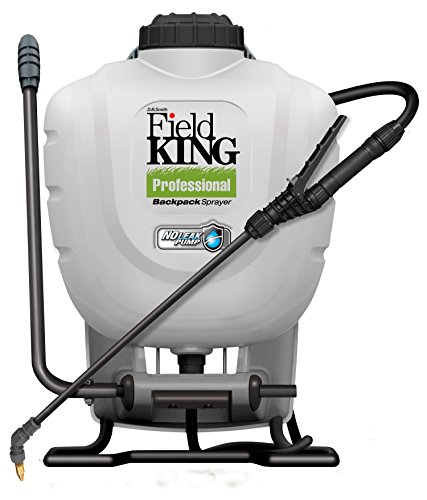 Field King backpack sprayerThe standard 4-gallon application tool
 3M 6300 half facepieceRespiratory protection, when the label calls for it
 Heavy-duty nitrile glovesChemical-resistant hand protection
PPE requirements come from each product label, which is the controlling legal document. These are common categories, not use guidance. The full kit page.